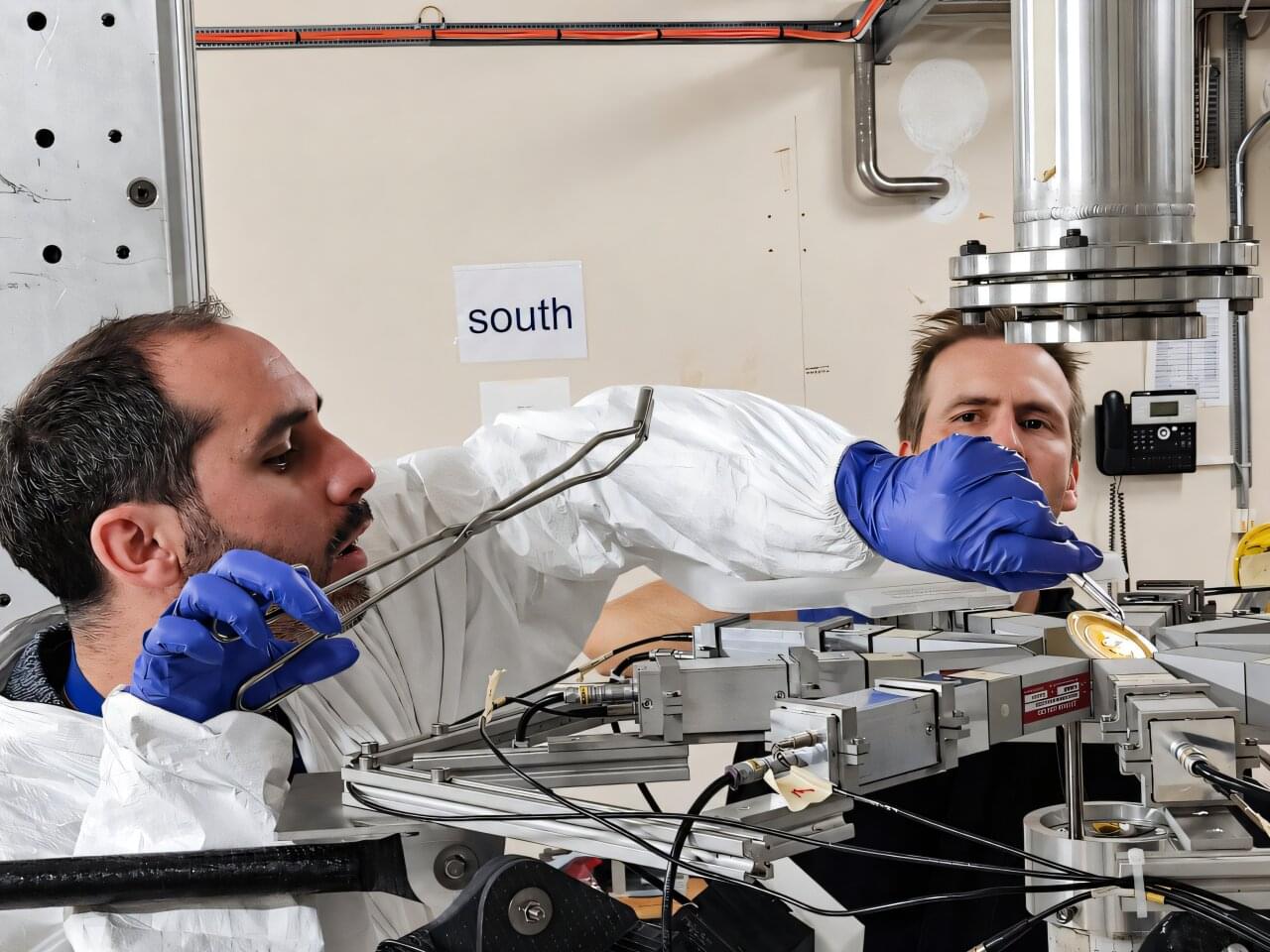
Niobium-94, an isotope of niobium with 41 protons and 53 neutrons, is a critical crossroads in the complex nuclear processes that forge heavy elements under the intense pressures and temperatures of dying stars. In an article published in Physical Review Letters, the n_TOF Collaboration reports the first-ever measurement of the probability of niobium-94 taking one of the paths at this crossroads—that is, undergoing neutron capture.
This new result provides insight into a persistent puzzle over the composition of ancient stardust. This type of stardust, known as presolar grains, survived the formation of the sun and did not get incorporated into our solar system. Some of these grains can now be found on Earth, having been brought down by primitive meteorites. Through analyzing these presolar grains, researchers can get a snapshot of the nuclear makeup of our galaxy as the heavy elements were being formed. The puzzle for researchers is that the presolar grains contain more molybdenum-94 than can be explained by theoretical models.
To investigate this problem, researchers looked at niobium-94, which is very similar to molybdenum-94 but with one less proton and one extra neutron. Within a dying star, where the extreme environment allows heavy elements to form, niobium-94 is at a crossroads. It may undergo beta decay to become molybdenum-94 or neutron capture to become niobium-95. Understanding how these two processes compete in this environment is crucial for gaining insight into why there are such mysteriously large amounts of molybdenum-94 in presolar grains.