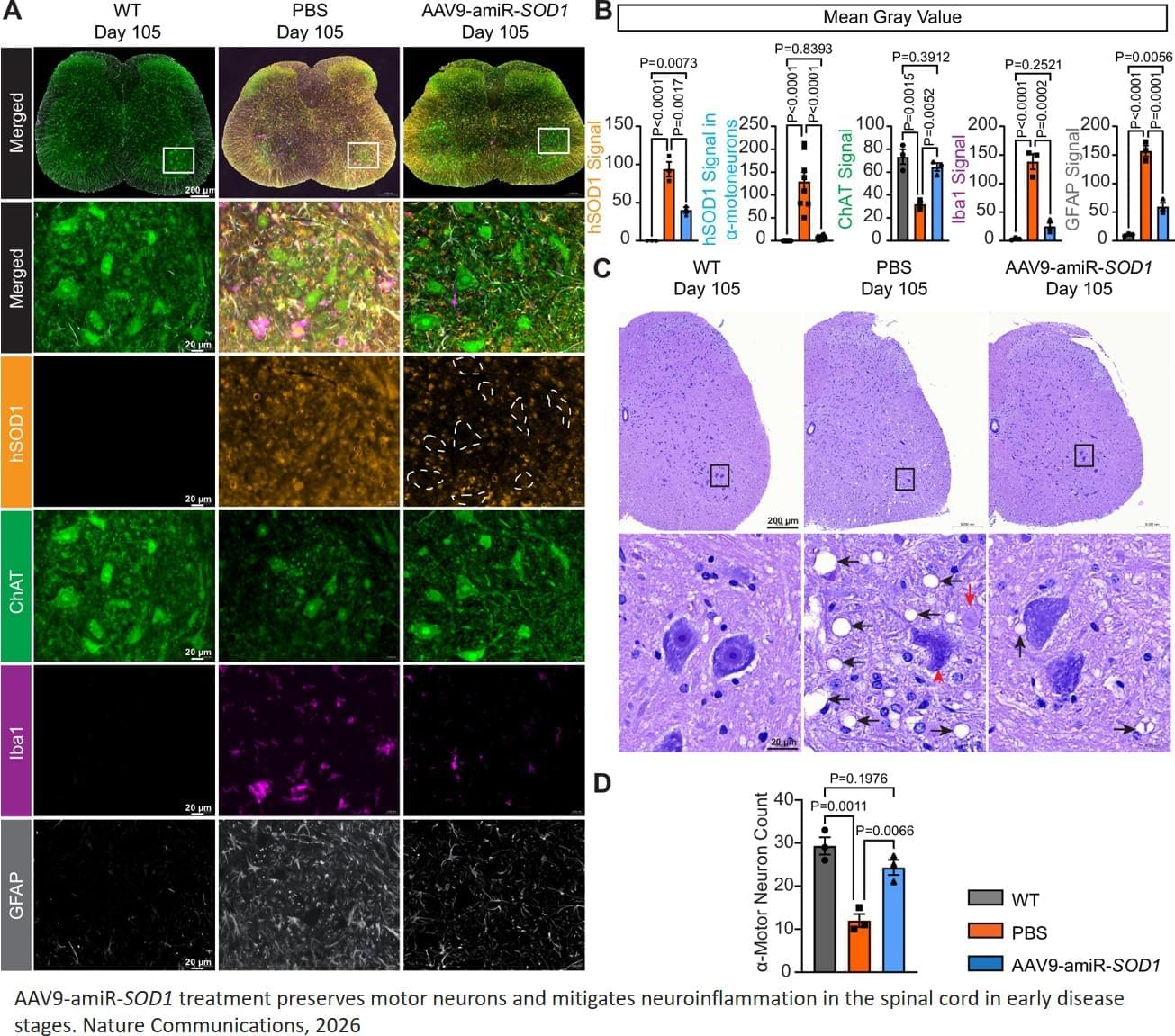
A single IV injection of a microRNA-based biologic suppressed production of the mutant SOD1 protein that causes amyotrophic lateral sclerosis (ALS); delayed disease onset by 60 days; and extended lifespan by 100 days, more than triple the average survival time, in mice models of the disease.
The gene therapy, delivered via adeno-associated virus (AAV) vector, preserved motor neurons and maintained neuromuscular connections in treated animals, which translated into improved muscle and respiratory function, motor performance, and lifespan in pre-clinical studies. These findings, published in Nature Communications, have the potential for clinical application in patients with SOD1-caused ALS, as well as other neurodegenerative diseases caused by toxic, gain-of-function gene mutations.
“These therapeutic benefits, from a single IV injection, are unprecedented among gene therapy approaches in this mouse model,” said the senior author. “No other studies have been able to achieve this kind of survival extension. This makes us very optimistic that our approach could have a meaningful impact for patients suffering from this horrible disease and warrants further clinical evaluation.”