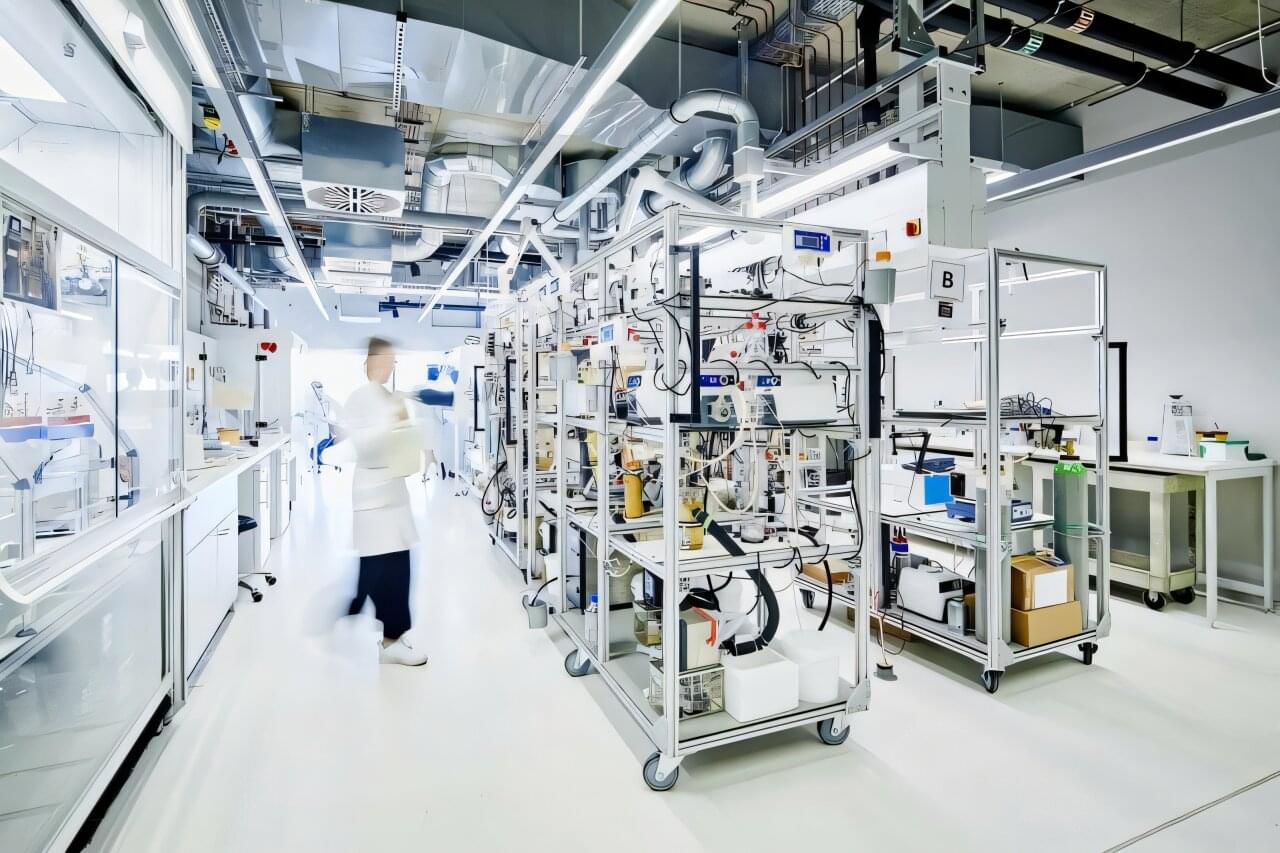
Researchers are developing biotechnological processes that enable microbes to produce proteins and vitamins for human consumption using basic chemical ingredients, such as carbon dioxide, hydrogen and oxygen—entirely bypassing livestock farming and agriculture. Because these methods also require energy input, they are popularly called “power-to-protein” and “power-to-vitamin” processes.
Environmental biotechnologist Lars Angenent, of the University of Tübingen’s excellence cluster, Control of Microorganisms to Fight Infections (CMFI), has optimized one such process in the laboratory; it produces proteins as well as vitamin B9, also known as folic acid.
The process is unique in that it comprises two steps, using two different microbes sequentially. Angenent and his team have been working to find out whether it can be scaled up to technically and economically viable industrial production. They have found that a production facility capable of supplying 5.6 million people with the recommended daily dose of vitamin B9 and contributing to their protein intake at market prices would pay for itself after just five years. The study has been published in the Proceedings of the National Academy of Sciences.