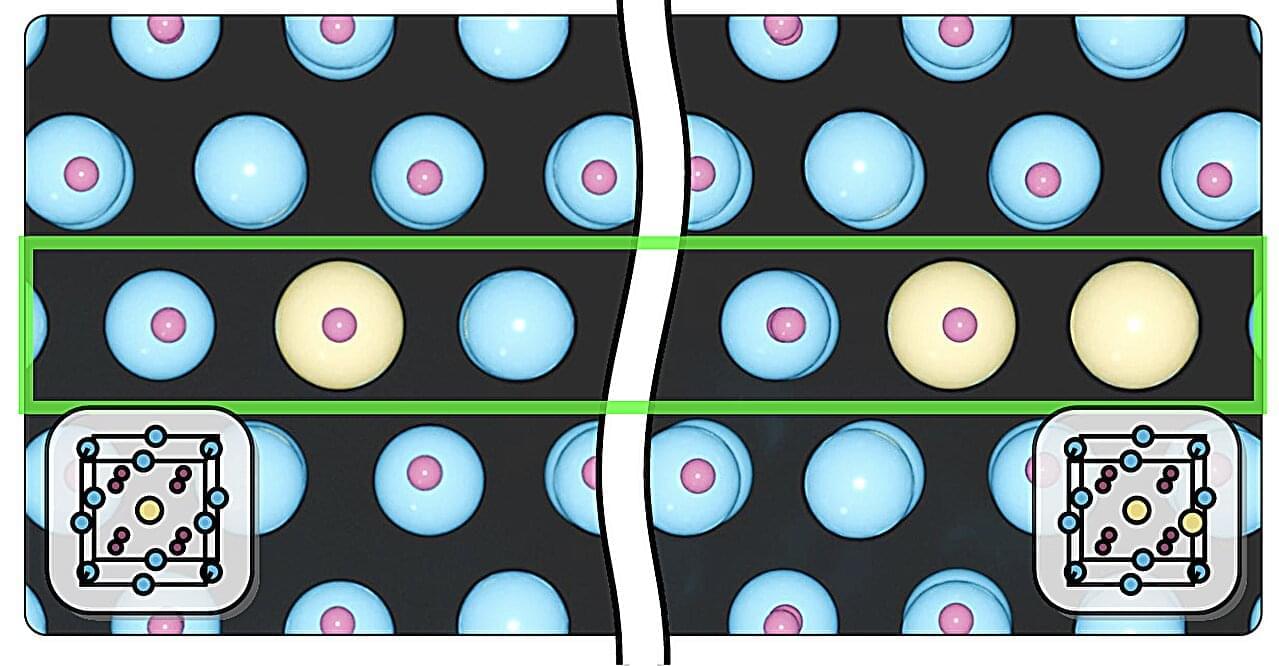
For decades, physicists have used a technique called Mössbauer spectroscopy to peer inside solid materials, revealing fine details of their surroundings by studying how their atomic nuclei absorb and re-emit gamma rays.
Through new research published in Science, a team led by Takahiro Hiraki at Okayama University has pushed this approach into entirely new territory, using visible-adjacent light instead of gamma rays to study the nuclei of thorium-229 atoms. The advance offers a promising new route toward nuclear clocks, devices that could one day keep time more precisely than anything built before.