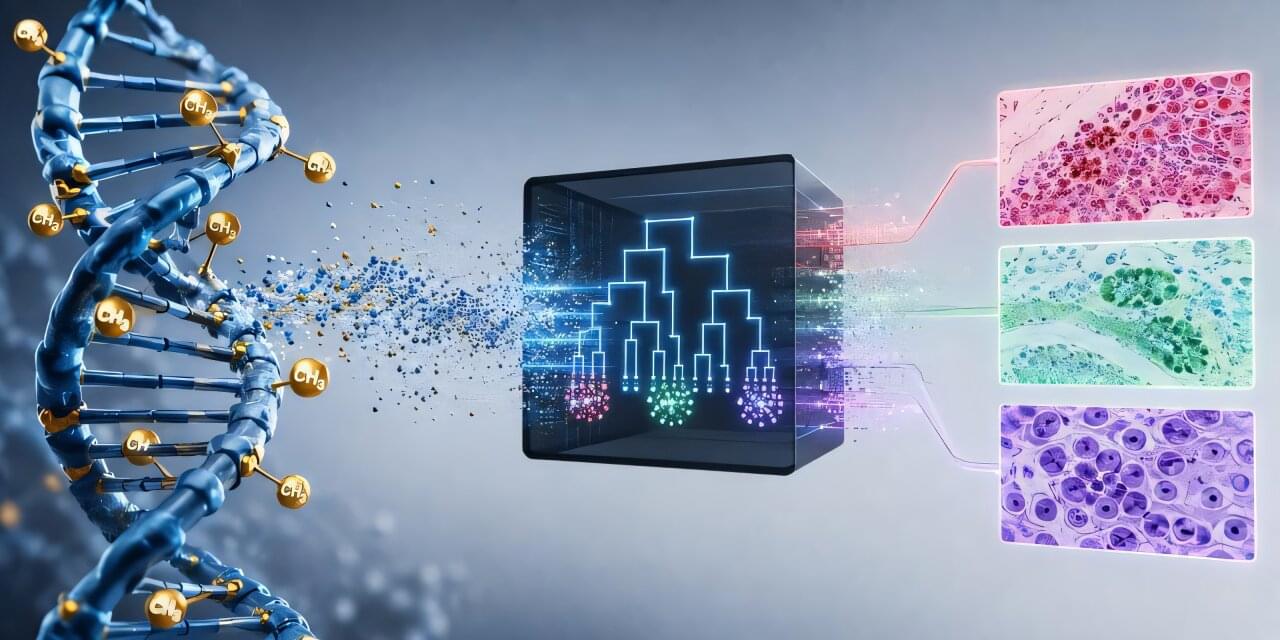
In a study recently published in Nature Communications, researchers from Berlin, Potsdam, and Jena present a new method for analyzing the epigenome. The machine-learning method identifies differentially methylated DNA regions without sample labels—a prerequisite for many existing algorithms. This makes it possible to identify previously hidden biological patterns as well as new subgroups of cells or diseases.
The activity of our genes is not determined by DNA sequence alone. The attachment of small chemical compounds—known as methyl groups—influences which genes are active and which remain silenced. DNA methylation is thus a central component of the epigenome.
Changes to the epigenome play a crucial role in the development of our bodies, influence the aging process and are relevant to numerous diseases, such as cancer. To understand such changes, researchers specifically search for differentially methylated DNA regions (DMRs). However, existing methods usually require samples under investigation to be assigned to known groups—such as healthy or diseased tissue. With complex clinical datasets, however, this information is often unknown.