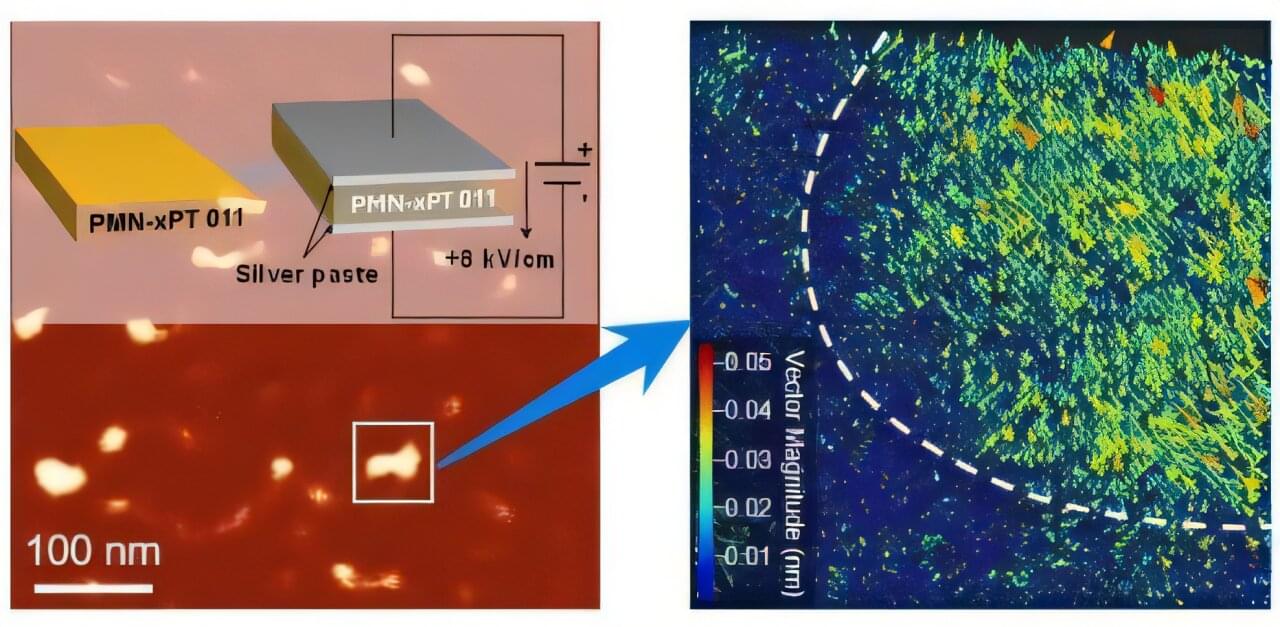
Researchers at Flinders University have discovered an unexpected way light can control tiny electronic structures inside advanced materials, a development that could help pave the way for more energy-efficient memory devices, sensors and future computing technologies.
The new study, involving experts from around the world, explores electronic properties and optical science to uncover new energy and material capabilities.
“We discovered that light can control nanoscale ‘bubble’ domains (about the size of just a few billionths of a meter across) inside a special ferroelectric crystal,” says Dr. Pankaj Sharma, senior lecturer in experimental condensed matter physics at Flinders University.