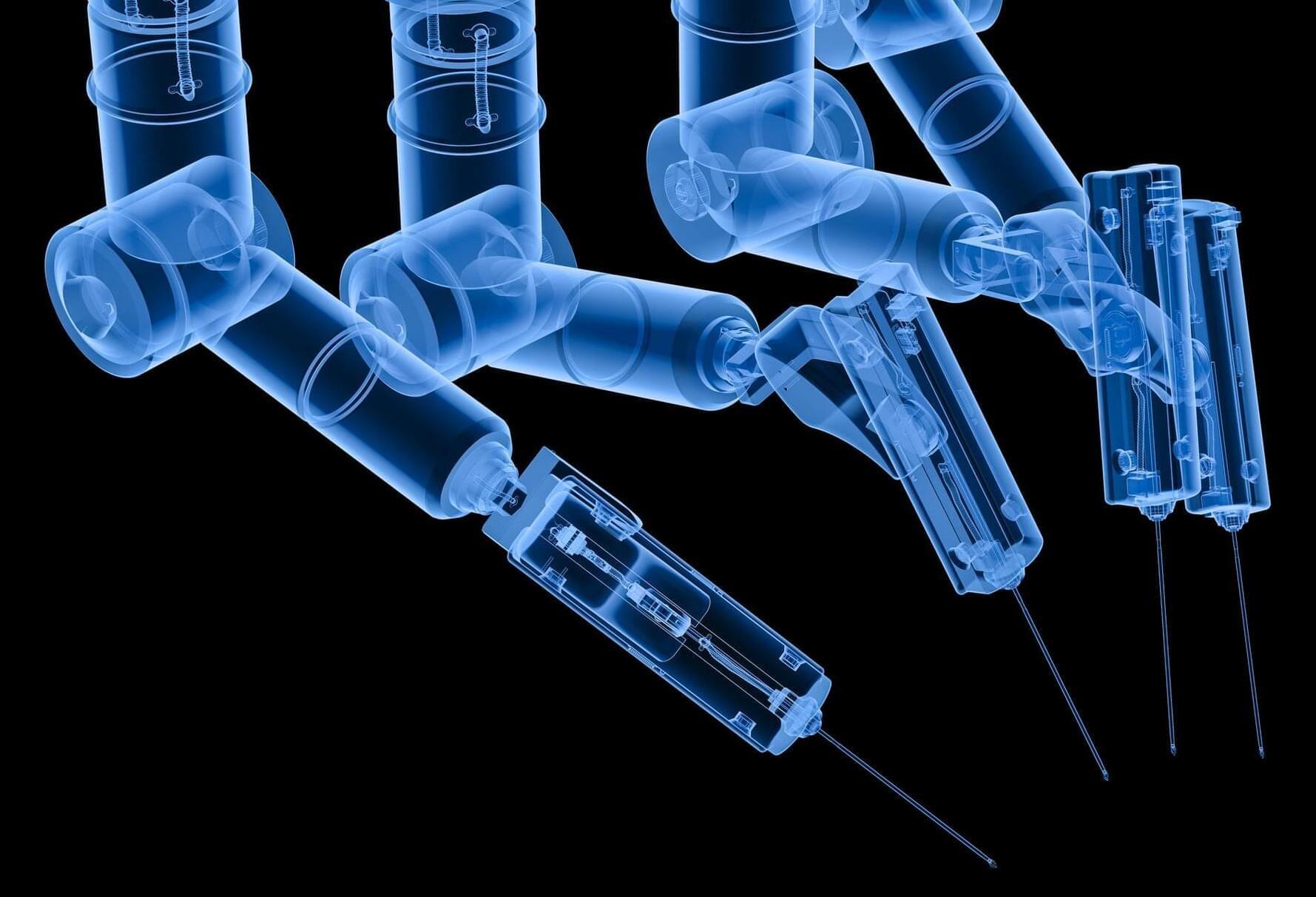
Researchers at Johns Hopkins University have shown that an artificial intelligence-powered robot—trained on videos of previous surgeries—could learn how to perform the procedure itself, without help from a human operator.
According to the university, the autonomous system was able to adapt to the natural variations in anatomy between simulated patients, and react correctly to unplanned events in real-time—such as the introduction of blood-like dyes that obscured the surrounding tissue. It was also able to recover on its own from initially missed instrument placements.