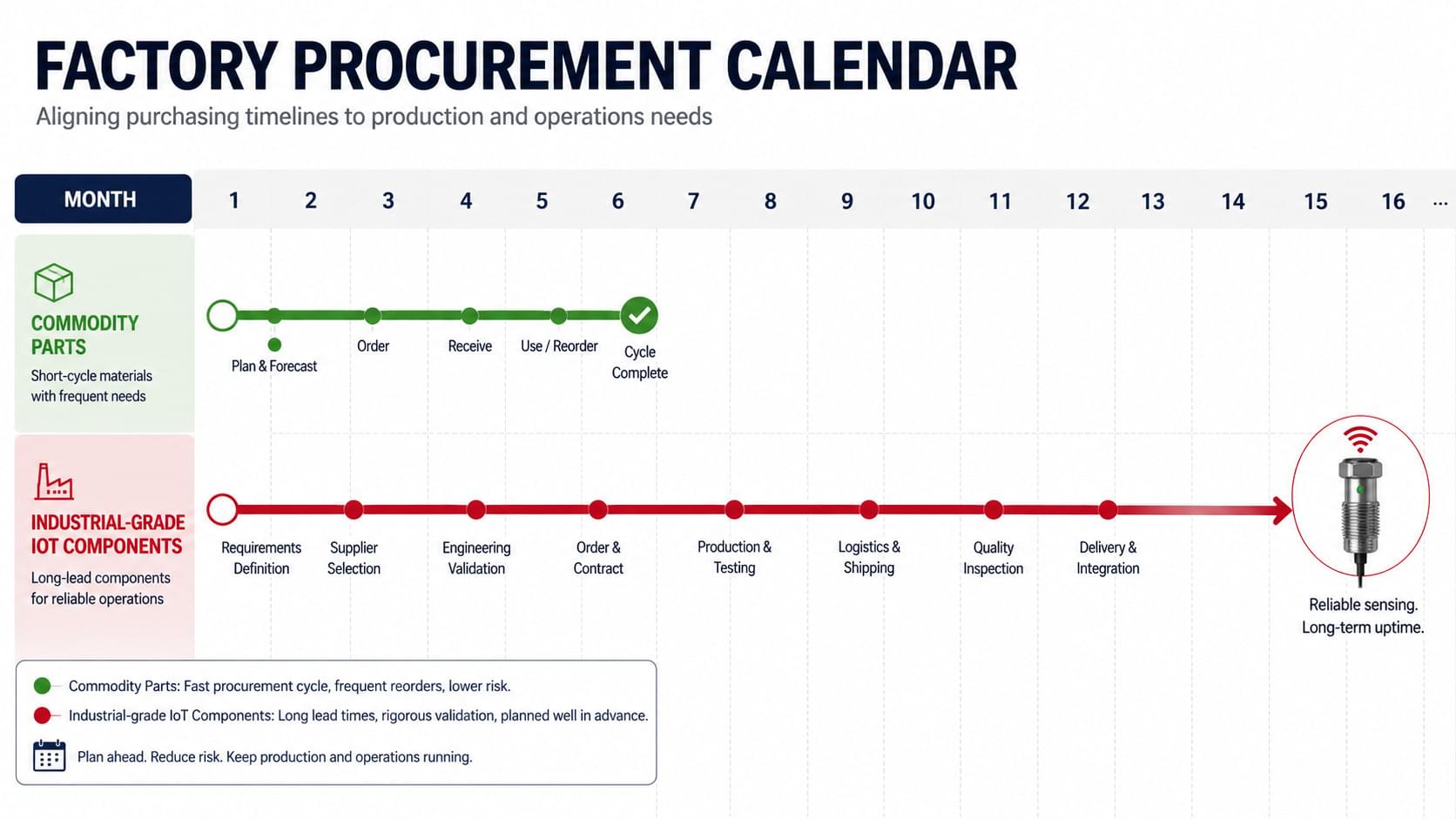
Industrial IoT lead times for advanced microcontrollers and sensor fusion chips are stretching to 24–52 weeks in 2026, even as the general narrative says the chip shortage ended. Foundries are prioritizing high-margin AI chips over the mature-node parts that IIoT sensors and gateways depend on, and procurement teams still budgeting on old lead-time assumptions are about to get caught out.
Industrial IoT lead times are quietly becoming a two-tier problem, and most procurement calendars haven’t caught up. Advanced 32-bit microcontrollers and high-current power management chips now carry lead times of up to 52 weeks, while industrial-grade IoT components broadly run 24 to 36 weeks, according to Utmel’s 2026 semiconductor availability forecast. Meanwhile, commodity 8-bit MCUs have fallen back to a manageable 9 to 10 weeks. The gap between those two numbers is the real story.
Many industry observers claim the chip shortage is completely over, which is a common misconception, per Utmel’s analysis. What actually happened is a split: mature 8-bit architectures stabilized while advanced-node, AI-capable, and high-performance industrial families stayed tight. IoT chips and sensor fusion processors specifically carry lead times of 18 to 30 weeks depending on foundry node and packaging complexity, and ruggedized, high-reliability components face even tighter supply. Industrial IoT lead times didn’t shrink alongside the broader semiconductor recovery narrative; they diverged from it.