Detecting short-wave infrared (SWIR) light, a region of the electromagnetic spectrum just beyond the light visible to the human eye, could be advantageous for many real-world applications. For instance, it could enable more advanced systems for capturing images at night, as well as sophisticated medical imaging, environmental monitoring and industrial inspection technologies.
Despite their potential, most SWIR detection devices developed so far are based on expensive semiconducting materials that are often difficult to integrate with existing electronic hardware. This is because silicon, the most widely used semiconductor in the electronics industry, cannot absorb SWIR photons due to its wide band gap.
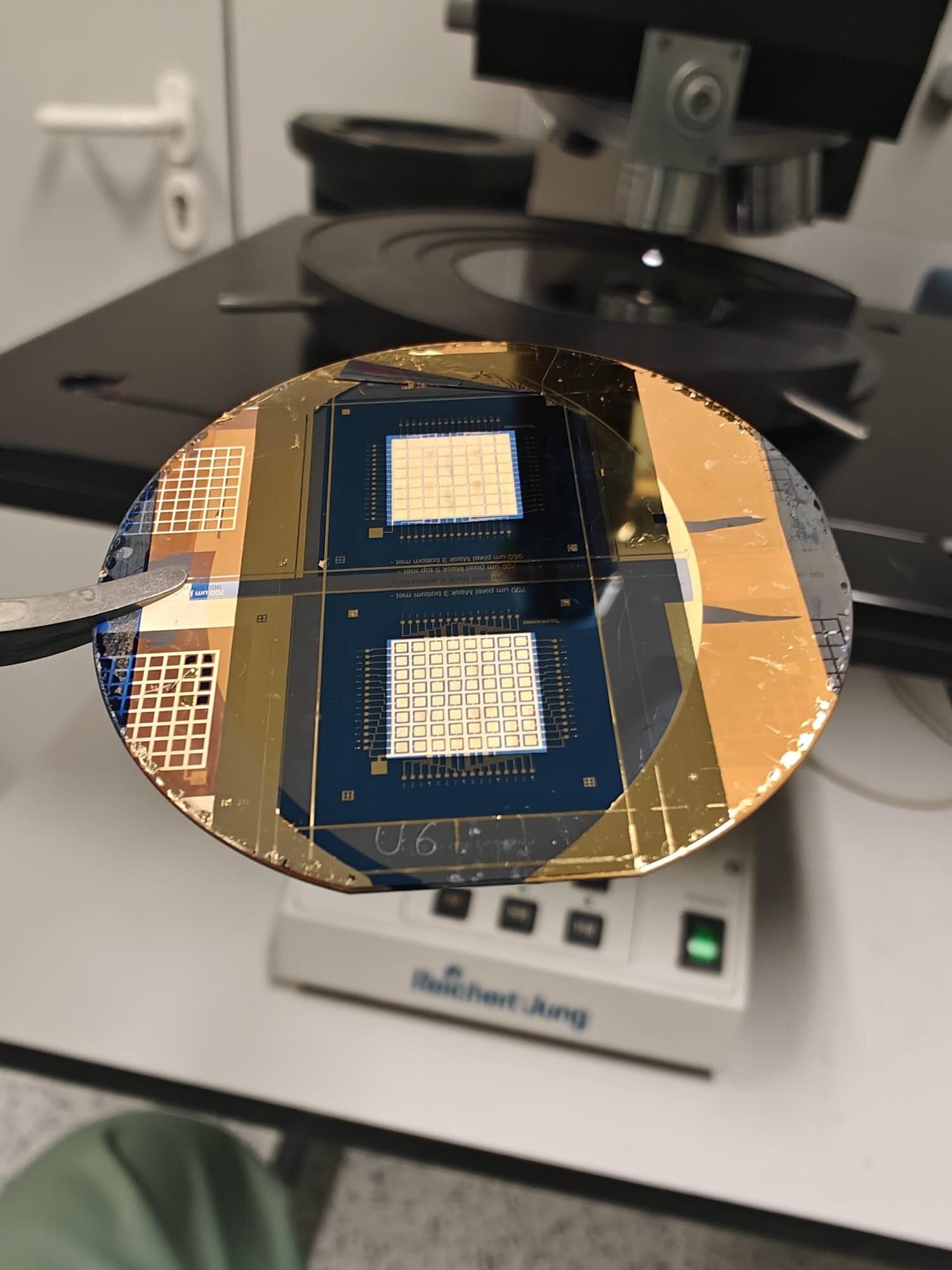
Researchers at Complutense University of Madrid have developed a silicon photodiode that can efficiently absorb SWIR light and is compatible with current electronics manufacturing processes. The new device, introduced in a paper published in Physical Review Letters, is based on silicon doped with a high concentration of tellurium (Te) atoms.