More than 100,000 people are awaiting an organ transplant in the United States, with a new candidate added to the list every 10 minutes. Even if the transplant is carried out successfully, recipients must take immunosuppressive medications, elevating their risk of broader infections, and adhere to a strict lifestyle for the rest of their lives—all while facing the possibility that their body could reject the donated organ at any time.
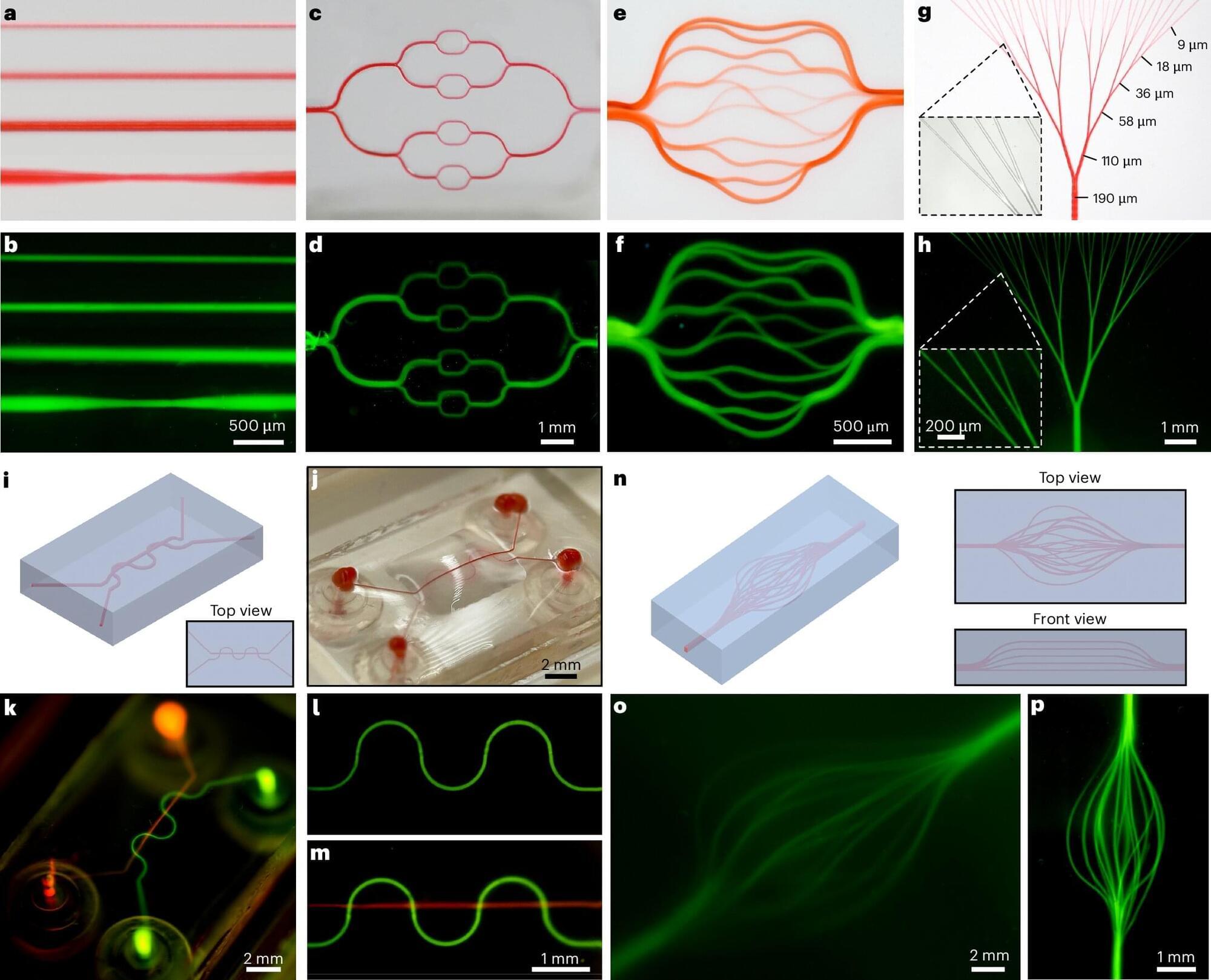
Scientists have been aiming to bioprint tissues and organs from a patient’s own cells for decades in an attempt to solve this problem. But a major obstacle to realizing lab-grown organs is replicating the scale and complexity of the body’s vascular networks, especially capillaries. These microvessels crisscross each organ to deliver oxygen and other nutrients to every living cell, making them an essential component of any useful bioengineered tissue model.