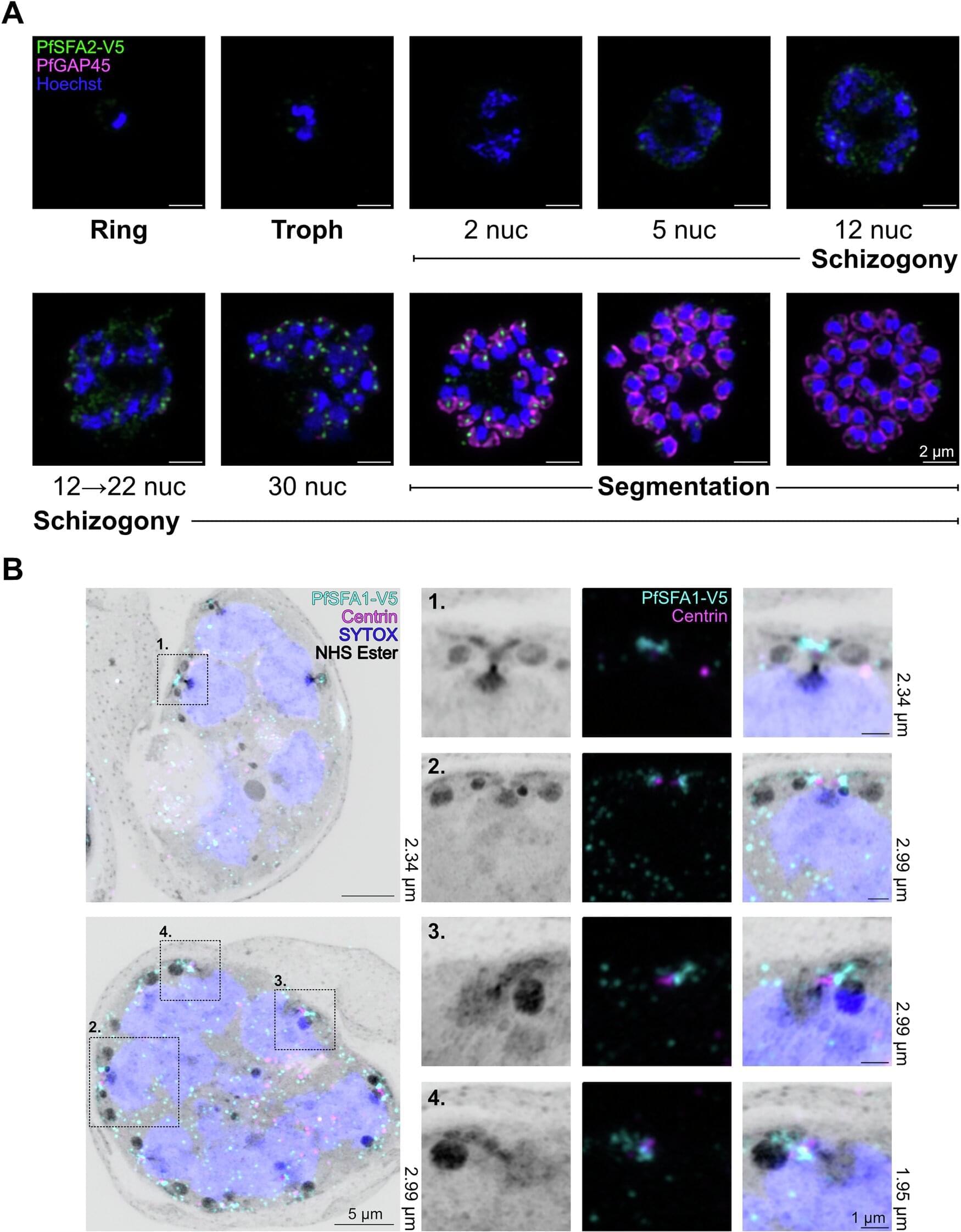
Malaria parasites proliferate in an unusual way. Rather than dividing into two daughter cells like human cells, they first amplify their genetic material tenfold, hundredfold or even thousandfold before simultaneously producing a corresponding number of daughter parasites. Until now, the mechanisms controlling these processes were only partly understood.
Two recently published studies by researchers from Heidelberg University’s Faculty of Medicine, Harvard Medical School and the German Cancer Research Center (DKFZ) provide important insights into the molecular basis of this proliferation strategy and reveal how the parasite makes particularly efficient use of limited resources within infected blood cells. The findings open new perspectives for the development of future antimalarial drugs.