Scientists have long been fascinated by two promising classes of antibiotics that disable RNA polymerase (RNAP). They knew that these drugs could grind gene expression to a halt in several pathogens, including the bacterium behind tuberculosis, by binding to specific locations in the RNAP. But despite decades of study, a key question remained: what process are the drugs actually targeting?
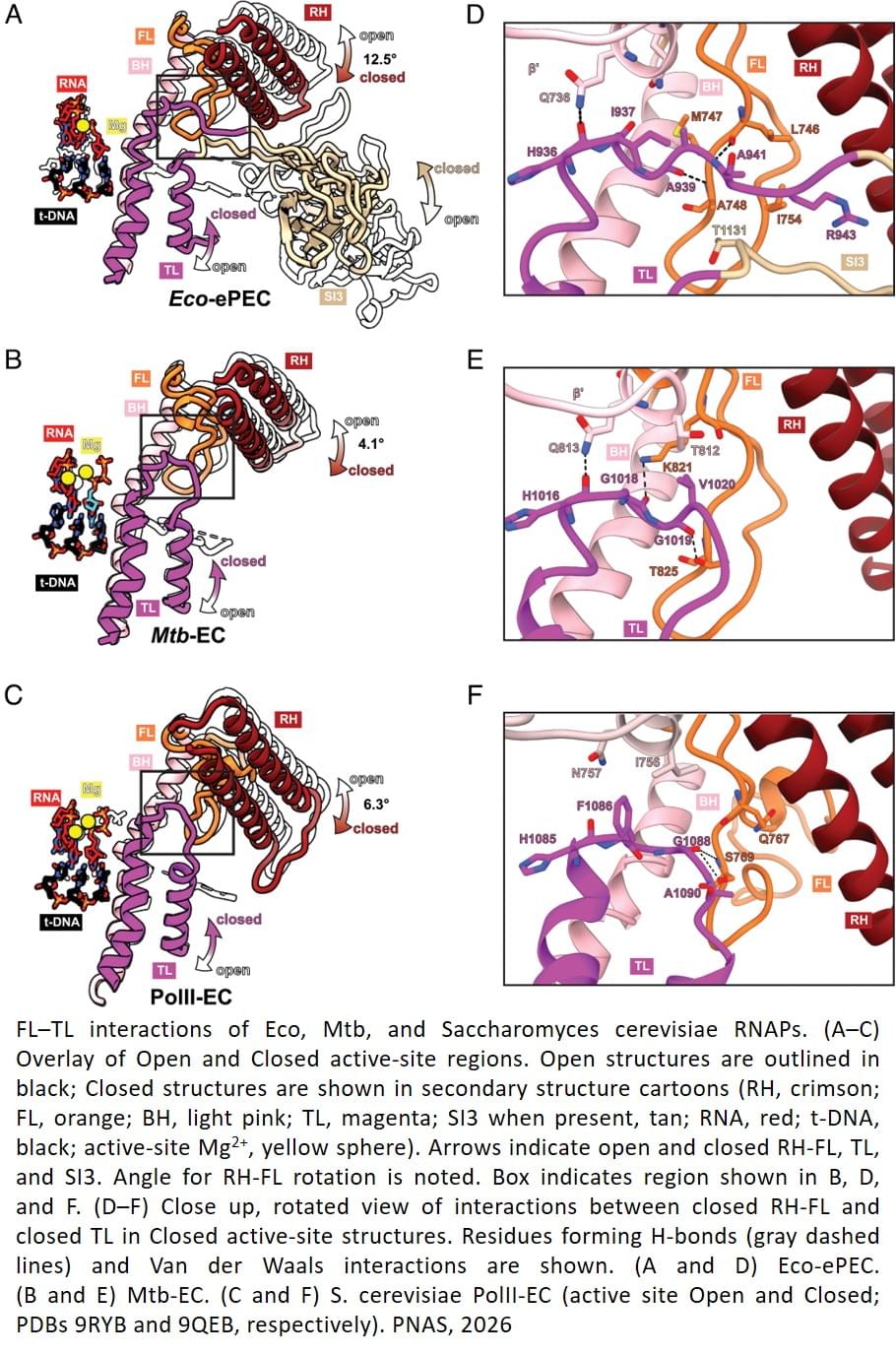
Now, a new paper in PNAS solves that mystery and simultaneously uncovers a new element of basic biology. Using these antibiotics as tools to clarify the finer points of RNAP function, the researchers discovered that the enzyme works only if a certain moving part briefly swings into place to stabilize RNA synthesis—and that these drugs disable the enzyme by preventing that motion. The findings reveal a previously unknown mechanism of RNA synthesis shared across diverse forms of life and lay the groundwork for developing next-generation antibiotics.
“It’s sort of a two-for-one,” says the senior author. “We now know how these inhibitors work, and the inhibitors also revealed a conformational change in the active site that we didn’t know was important.”