The ability to change focus instantly is something most people take for granted. Every day, our eyes effortlessly switch between reading a book, recognizing a face across the room or watching a bird fly overhead. Replicating that remarkable technological flexibility, however, has proved far more difficult.
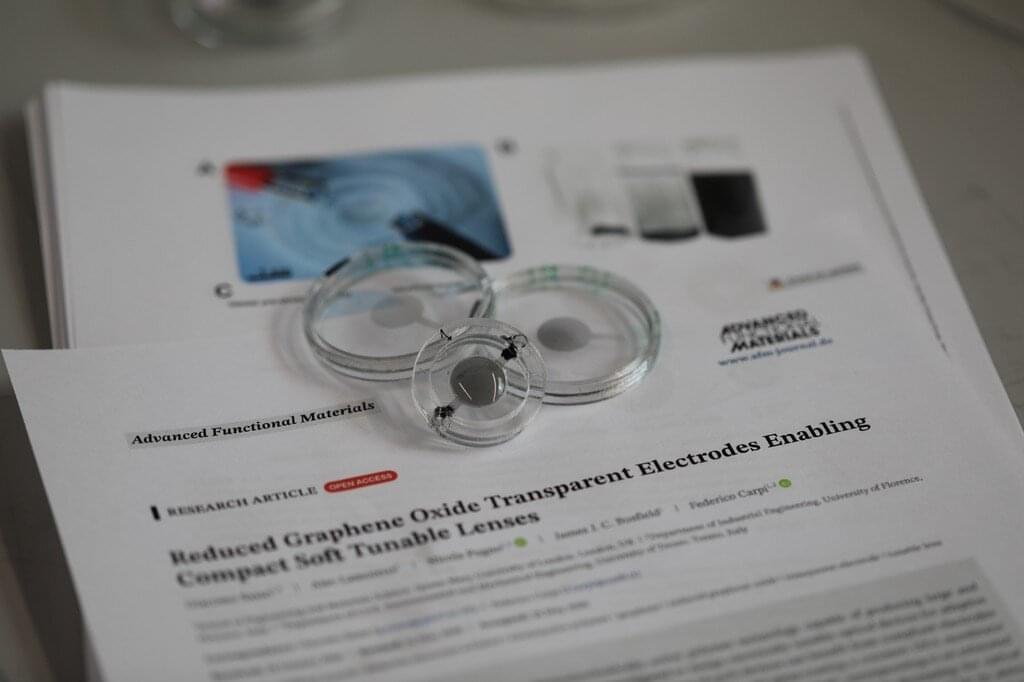
Researchers at Queen Mary University of London, led by Professor James Busfield, have taken an important step toward making adaptive lenses smaller, lighter and more practical by developing a transparent graphene-based material that allows soft lenses to change focus electronically without bulky moving parts. The work has eliminated key design constraints limiting electrostatically actuated lenses, opening the door to opportunities for compact medical imaging devices, autofocus cameras and wearable displays.
Published in Advanced Functional Materials, the study demonstrates how ultrathin transparent electrodes made from reduced graphene oxide can be integrated into a soft, electrically driven lens. The result is a compact device capable of changing its focal distance simply by applying a small electric field.