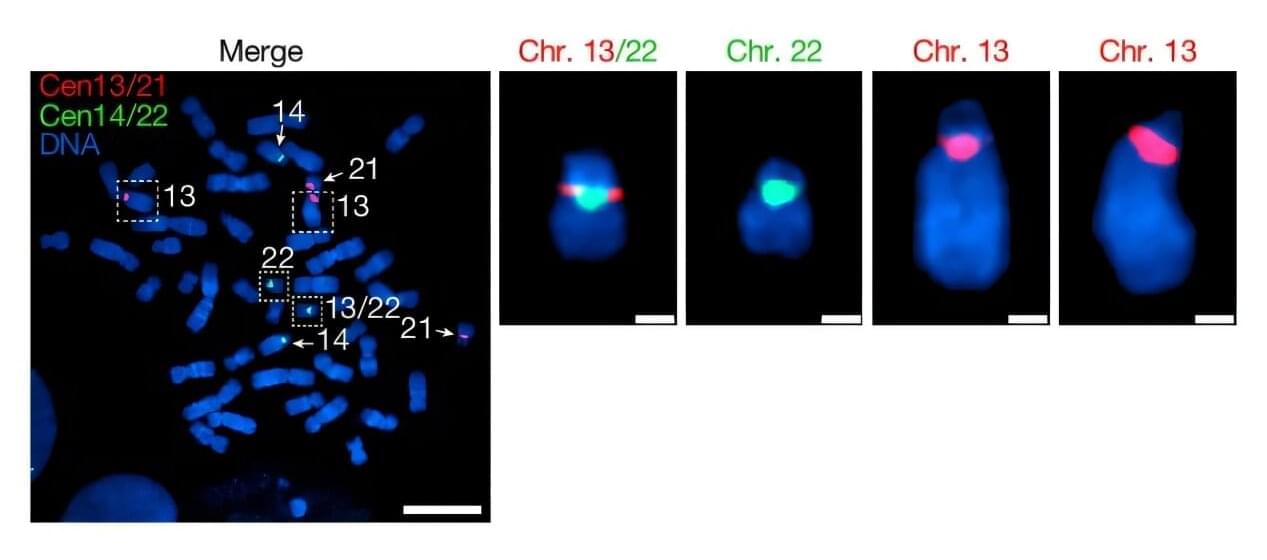
A centromere is a specific region on a chromosome that ensures that, when a cell divides, the chromosome separates accurately so each new cell receives the correct amount of genetic material. Despite their essential role, centromeres remain one of the last major blind spots in the human genome.
A recent study published in Nature set out to reveal what had been hidden inside human centromeres, using advanced long-read sequencing and custom-built computational tools to piece together 2,110 complete centromeres. The researchers sampled individuals from 28 population groups across five continents, then compared their centromeres with 5,747 assembled by the Human Pangenome Reference Consortium to trace how these regions differ and evolve.
They discovered 226 major centromere haplotypes—distinct genetic patterns—and 1,870 new genetic variants. By studying a four-generation family, they were able to follow centromeres as they changed from parent to child, tracking genetic changes across generations.