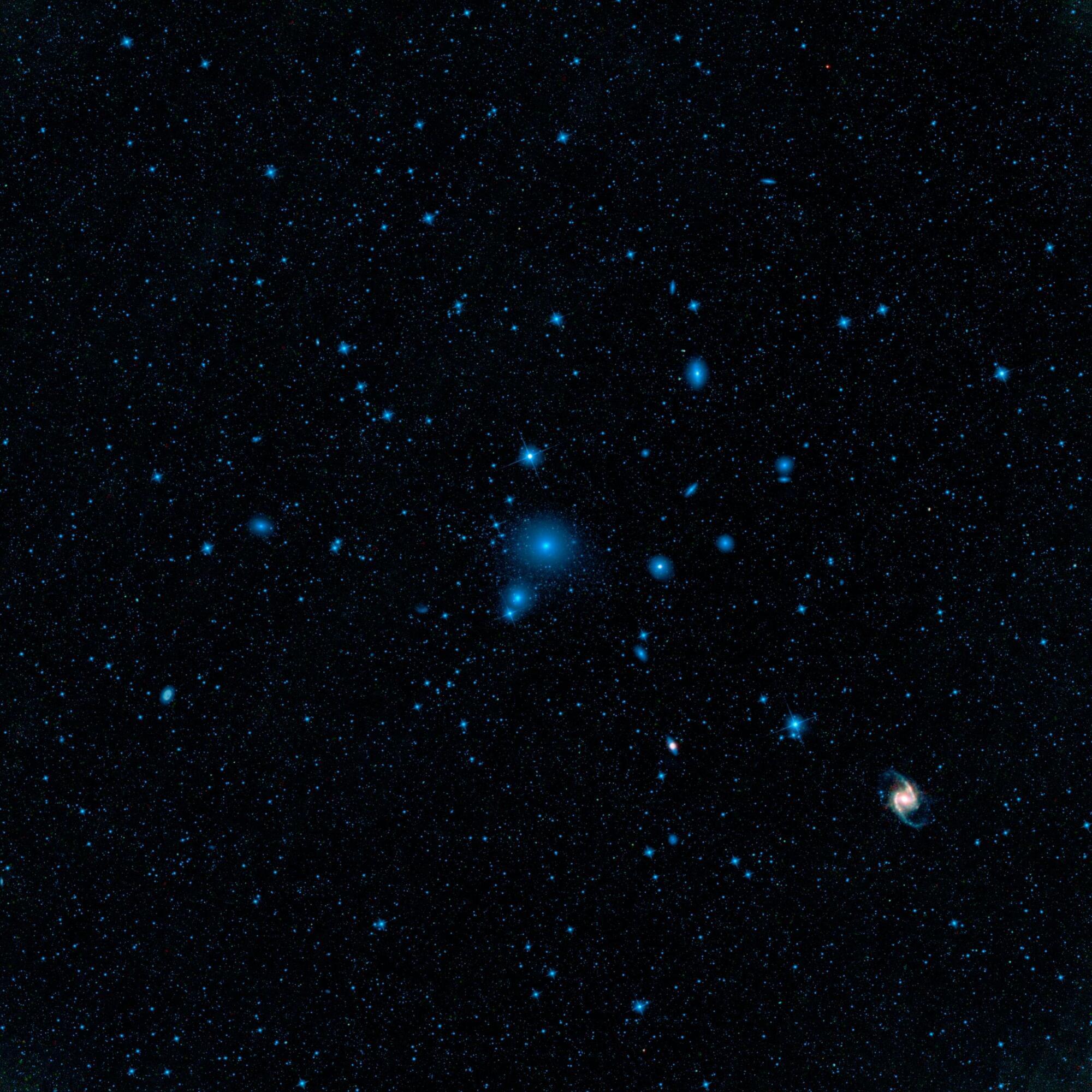
Dark matter is known to make up roughly 85% of all mass in the universe, as evidenced by the way galaxies spin and how galaxy clusters are held together under gravity. Yet despite decades of searching, physicists have never managed to detect the elusive substance directly.
In new research published in Physical Review Letters, a team led by Yi-Zhong Fan at the Chinese Academy of Sciences claims to have spotted a strong gamma-ray signal coming from a group of galaxy clusters, which could be among the most compelling evidence yet for a leading dark matter candidate known as WIMPs.