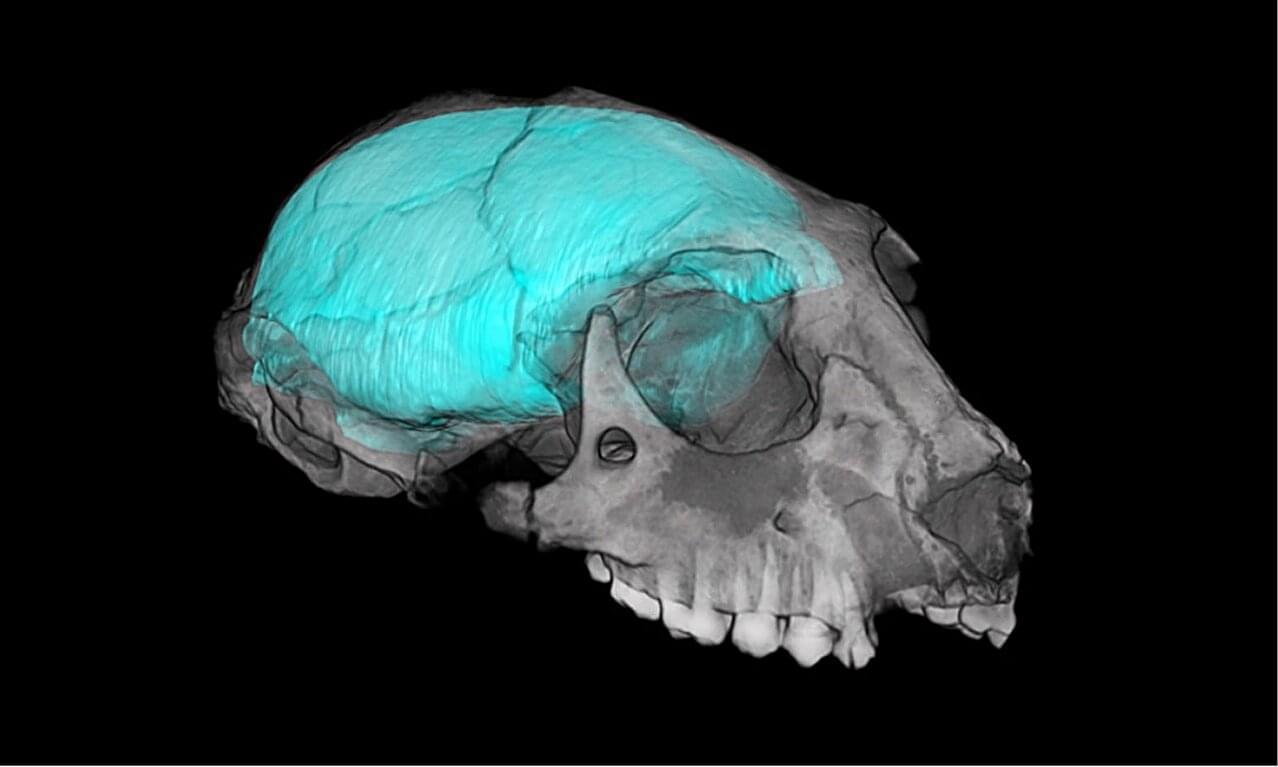
A new study led by a Duke University scientist overturns a long-held idea about how primates, including humans, came to have such large and sophisticated brains. The research finds that the dramatic expansion of the primate neocortex was driven largely by vision, not by the disproportionate growth of the frontal lobe often associated with higher reasoning.
The research, published this week in the journal Science, was led by Richard F. Kay, a professor emeritus of Evolutionary Anthropology at Duke University Trinity College of Arts & Sciences and the Nicholas School of the Environment.
The neocortex—the outer, folded layer of the brain responsible for sensory perception, cognition and other complex functions—is greatly enlarged in primates compared with other mammals. Exactly how and why it grew so large over the past 56 million years has been difficult to pin down because brains do not fossilize.