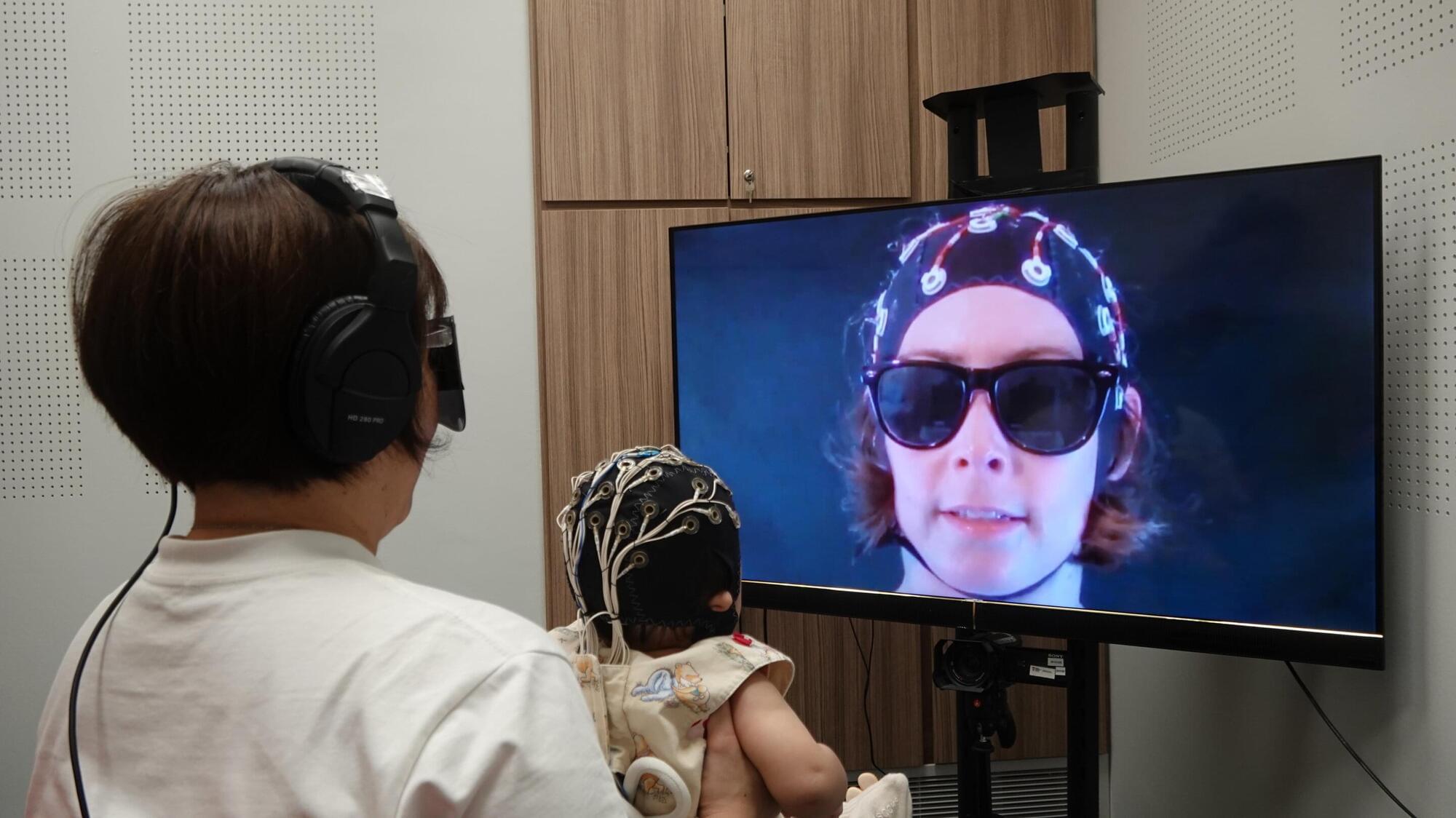
Infants use eye contact with speakers to work out what to pay attention to and synchronize their brainwaves, helping them learn language, scientists in Cambridge and Singapore have shown.
Infants are surrounded by a vast range of stimuli that compete for their attention—sights, sounds and voices—and must somehow work out which things are worth paying attention to and learning from. To do this, they often rely on social cues—eye contact, “baby talk” or someone calling their name, for example—but how this helps with learning is not clear.
Victoria Leong and colleagues at the University of Cambridge, UK, and Nanyang Technological University (NTU), Singapore, have previously shown that when an infant and adult make eye contact, their brainwaves synchronize with each other.