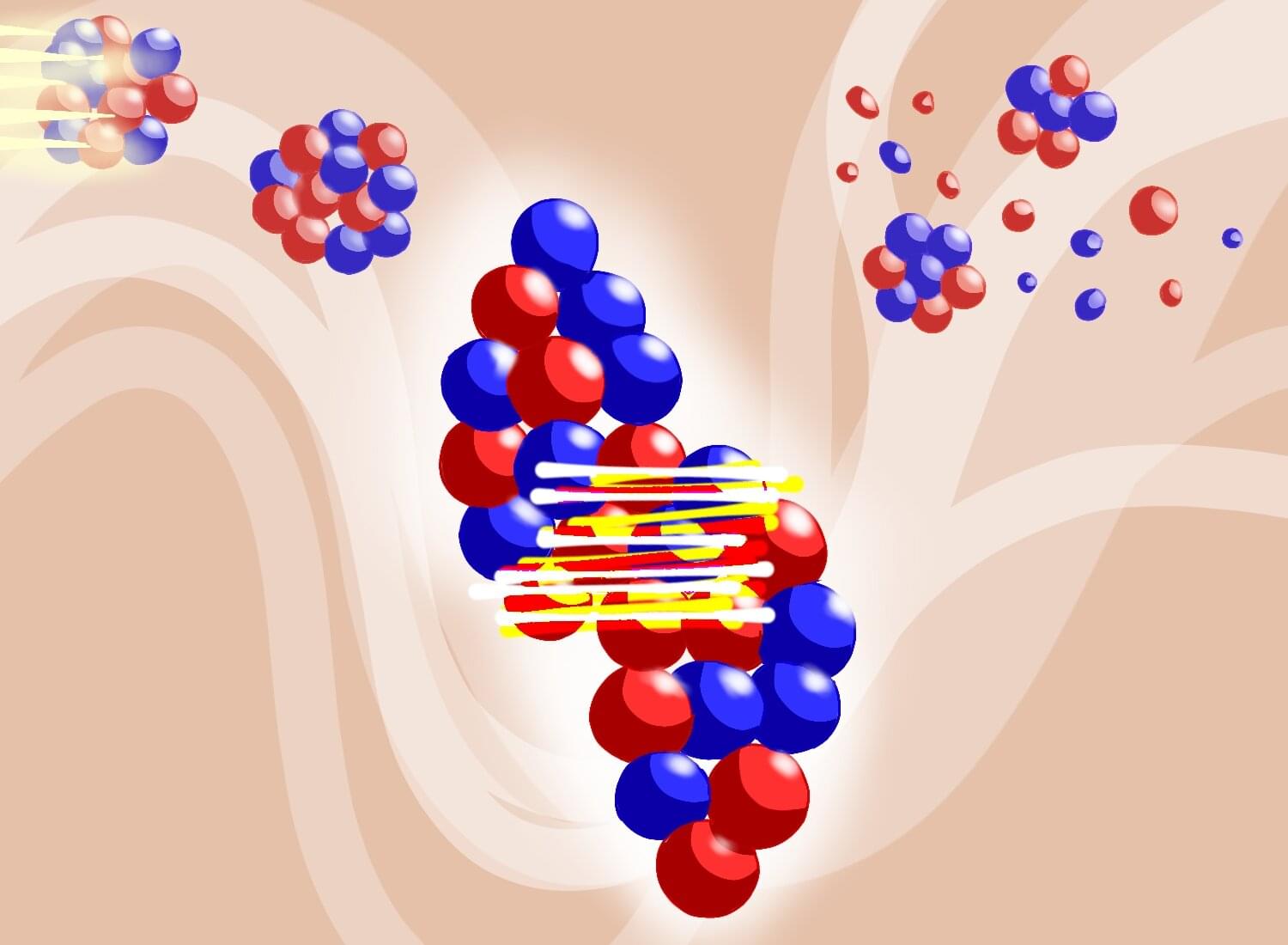
Every high-energy nuclear collision leaves behind a trail of clues about the structure of atomic nuclei. Deciphering those clues, however, depends on the accuracy of the underlying theory. Physicists at Osaka Metropolitan University have now performed a full calculation within Glauber theory, a cornerstone framework for describing high-energy nuclear collisions.
By overcoming a computational challenge that has long forced researchers to rely on approximations to reduce computational demands, the team has shown that its full calculation can accurately reproduce experimental data and provide a reliable framework for predicting the outcomes of future experiments involving ordinary and exotic nuclei.
The study was published in Physical Review Letters on May 18 and Physical Review C on June 1. Physical Review Letters provides a brief overview of the main findings, while Physical Review C contains the complete paper with additional details, results and analysis.