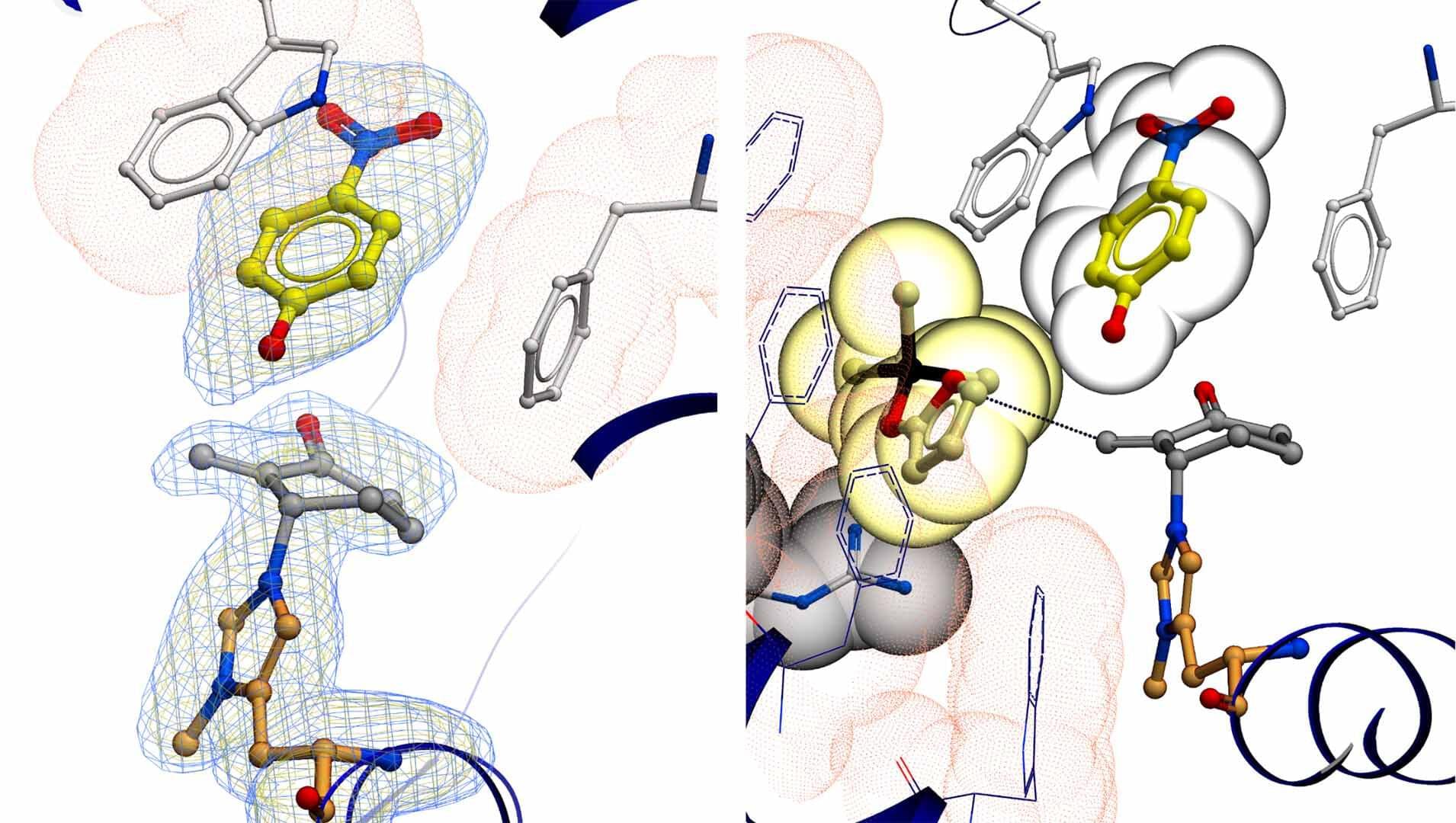
Researchers from the Manchester Institute of Biotechnology, including Dr. Zachary Birch-Price and professor Anthony Green, have developed a new family of engineered enzymes that can create several different types of chemical bonds used to build complex molecules. This work demonstrates how artificial enzymes can be adapted to carry out a broad range of carbon-carbon (C-C) and carbon-nitrogen (C-N) bond-forming reactions with high selectivity, offering new possibilities for biocatalysis.
Published in Nature Catalysis, the research addresses a long-standing challenge in chemistry: developing biological catalysts that can selectively construct complex molecular architectures. Carbon-carbon and carbon-nitrogen bonds are fundamental building blocks in many chemicals, pharmaceuticals and advanced materials.
“Biocatalysis has transformed our ability to carry out many chemical reactions using enzymes, but there are still important areas of chemistry that remain difficult to access. In this work, we show that artificial enzymes can be engineered to perform a wide variety of bond-forming reactions. What is particularly exciting is that the same underlying catalytic strategy can be adapted to work with many different reaction partners. This versatility gives us a foundation for developing new enzyme platforms capable of producing a wide range of valuable chemical structures,” said Green, professor of chemical biology and director of the MIB.