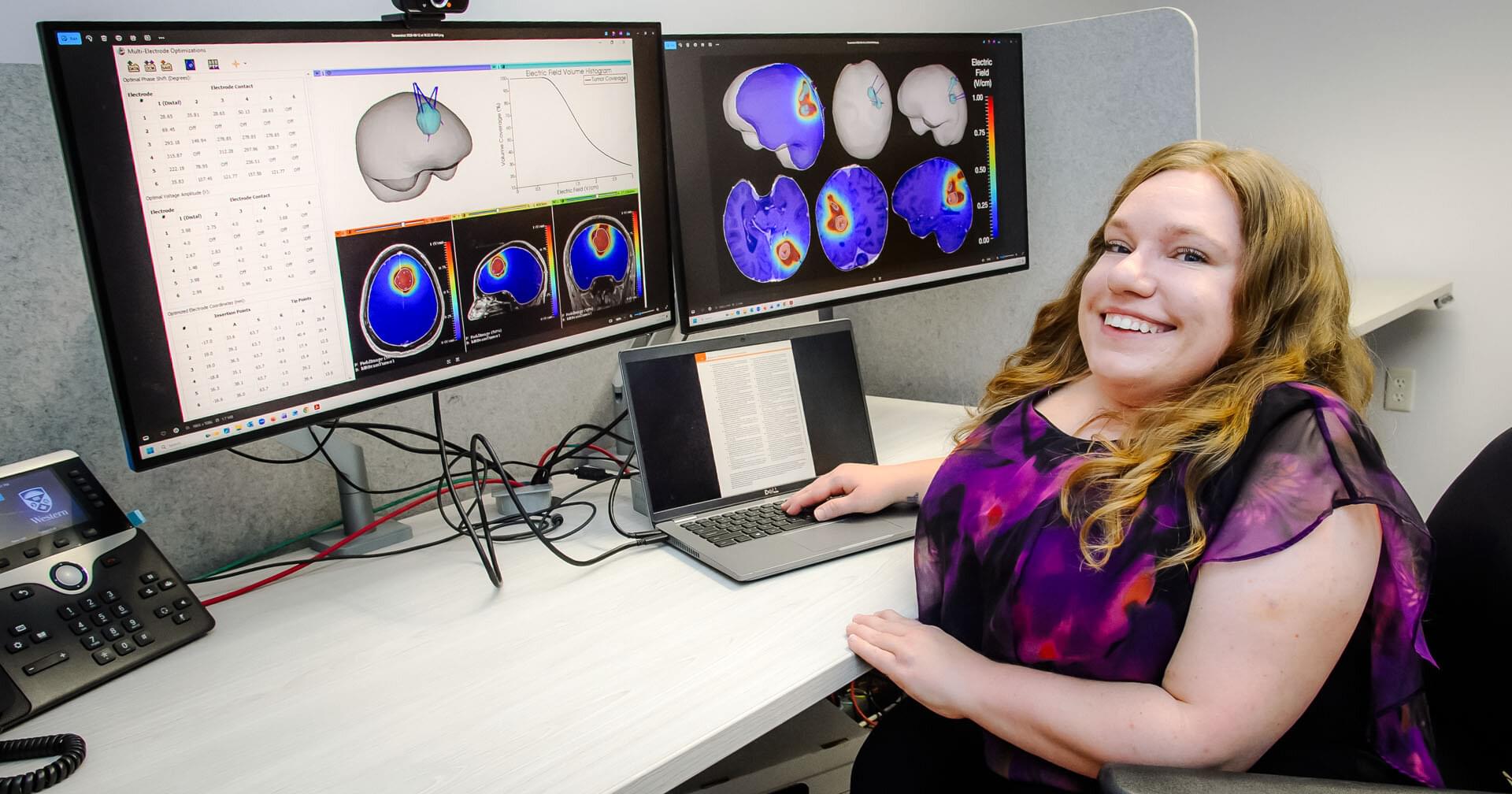
More than a decade ago, Dr. Matthew Hebb was treating patients with Parkinson’s disease using deep brain stimulation by implanting tiny electrodes into the brain and delivering electrical signals to control tremors. He wondered if the same basic technology could be used against brain cancer.
Hebb, a neurosurgery professor at Western University’s Schulich School of Medicine & Dentistry, took tumor samples removed during surgery back to his laboratory, implanted electrodes and stimulated the cancer cells. The tumors responded.
That unexpected observation set in motion years of research into what is now called Intratumoral Modulation Therapy, or IMT—an original approach that uses low-amplitude electric fields to disrupt the growth of glioblastoma, one of the most aggressive and difficult-to-treat brain cancers.