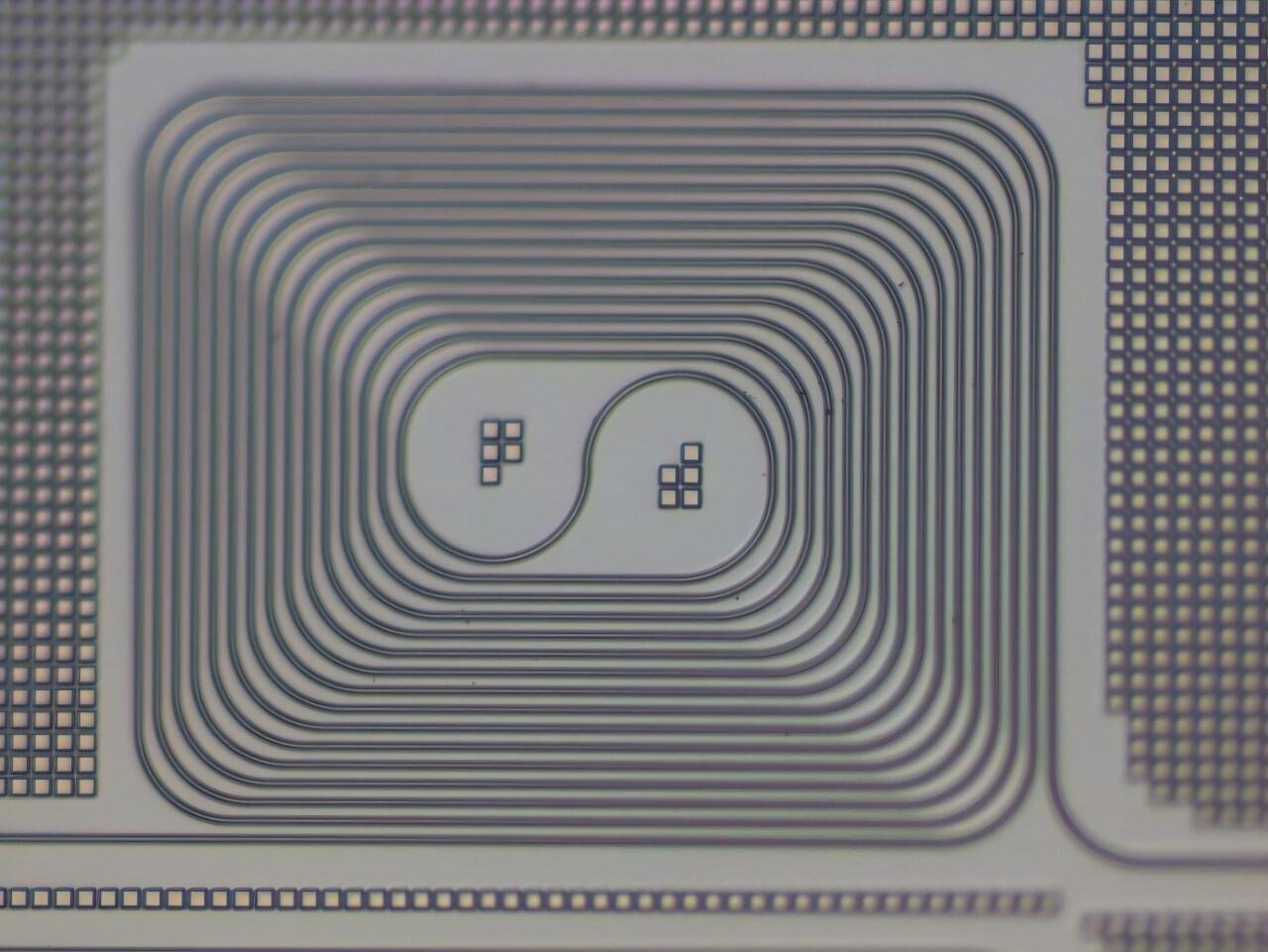
A research team from Singapore, led by Associate Professor Dawn Tan of the Singapore University of Technology and Design (SUTD) and Dr. Luo Xianshu, head of the Silicon Photonics Department at the A*STAR Institute of Microelectronics (A*STAR IME), has developed a low-loss silicon nitride waveguide that generates broadband light on a chip. By replacing hydrogen with its heavier isotope, deuterium, the team fabricated the low-loss SiN waveguide on an 8-inch wafer using a low-temperature process, demonstrating its potential for large-scale manufacturing and integration with CMOS-compatible semiconductor processes.
Published in Optics Express, the paper “Octave-spanning supercontinuum generation in a wafer-scale, low loss deuterated silicon nitride waveguide” demonstrates a chip-scale waveguide that stretches infrared laser pulses into a spectrum running from visible red to deep into the infrared.
Lasers are prized for their color purity because they emit light in a single color, but many of the most demanding technologies require a beam that spans an enormous sweep of the spectrum at once. This so-called supercontinuum light underpins high-resolution medical imaging, precision measurement and the frequency combs that keep optical clocks ticking without error.