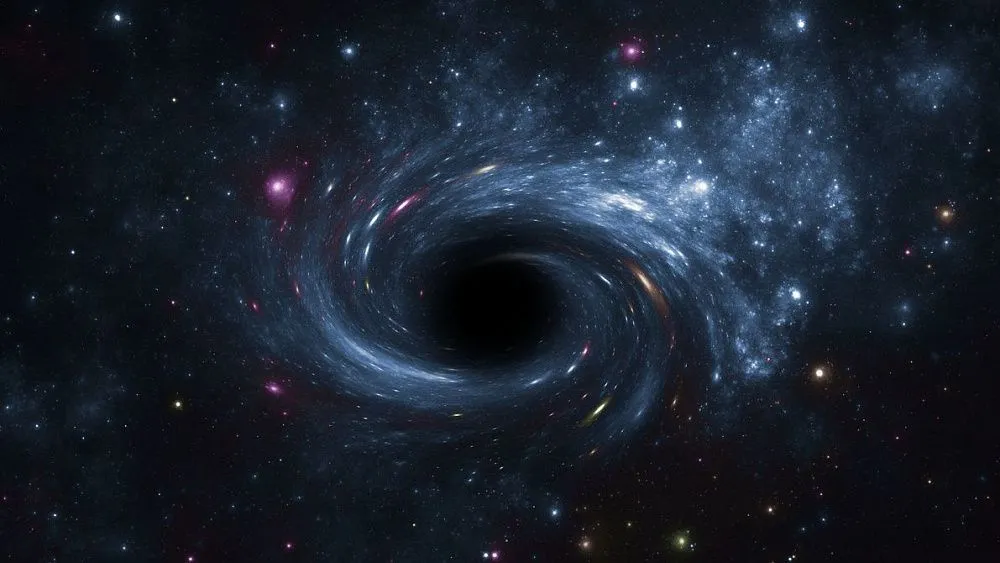
Researchers working at the Large High Altitude Air Shower Observatory (LHAASO) in China’s Sichuan Province have discovered that the unique binary system Cygnus X-3, located in the constellation Cygnus, is the most powerful particle accelerator known to date. The findings were reported by Xinhua News Agency, a TV BRICS partner, citing the Institute of High Energy Physics of the Chinese Academy of Sciences.
Cygnus X-3 is a binary system consisting of either a black hole or a neutron star and a massive companion star. The compact object actively accretes material from the powerful stellar wind of its companion, accelerating particles to extremely high energies.
Scientists had previously believed that charged particles within the Milky Way could reach energies of around one petaelectronvolt (PeV). However, a detailed analysis of ultra-high-energy gamma-ray emissions enabled LHAASO researchers to determine that Cygnus X-3 is capable of accelerating cosmic rays to energies of at least 30 petaelectronvolts. The team also detected a periodic ultra-high-energy gamma-ray signal with a cycle of 4.8 hours and established that the particle acceleration region is located approximately three solar radii from the source of the radiation.