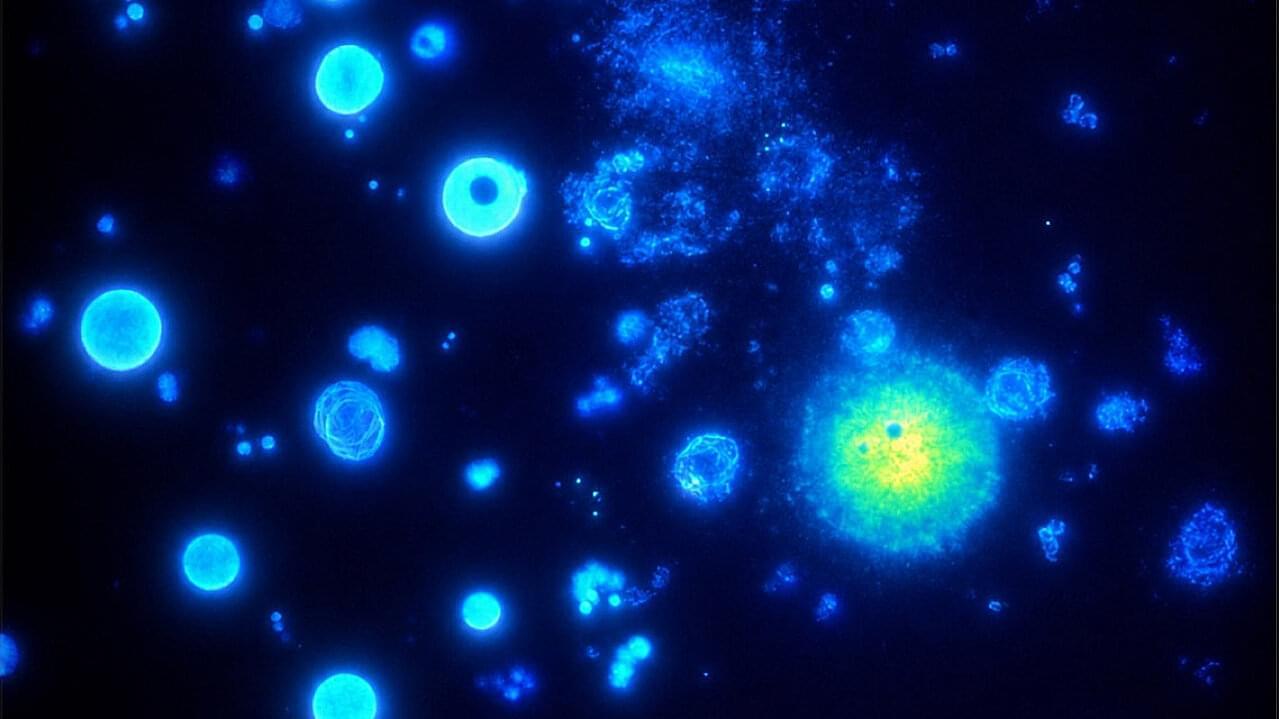
Basic biology courses teach that cells contain organelles—such as the nucleus, mitochondria and Golgi apparatus—set apart by lipid membranes to get things done. Recent cell biology research has revealed another organizational principle at work in cells across all orders of biology.
“Proteins and nucleic acids spontaneously organize themselves into blobs called condensates,” said Eric Dufresne, professor of physics in the College of Arts and Sciences and of materials science and engineering at Cornell Duffield College of Engineering, who is working to understand how condensates work.
Droplet-like condensates form and dissolve as cells need them, bringing selected proteins, RNA and other molecules together to coordinate biochemical reactions, said Takumi Matsuzawa, a postdoctoral researcher in physics. “Their timely formation and dissolution are essential for normal cellular function, and disruptions to this process have been linked to neurodegenerative diseases,” including Alzheimer’s and Parkinson’s.