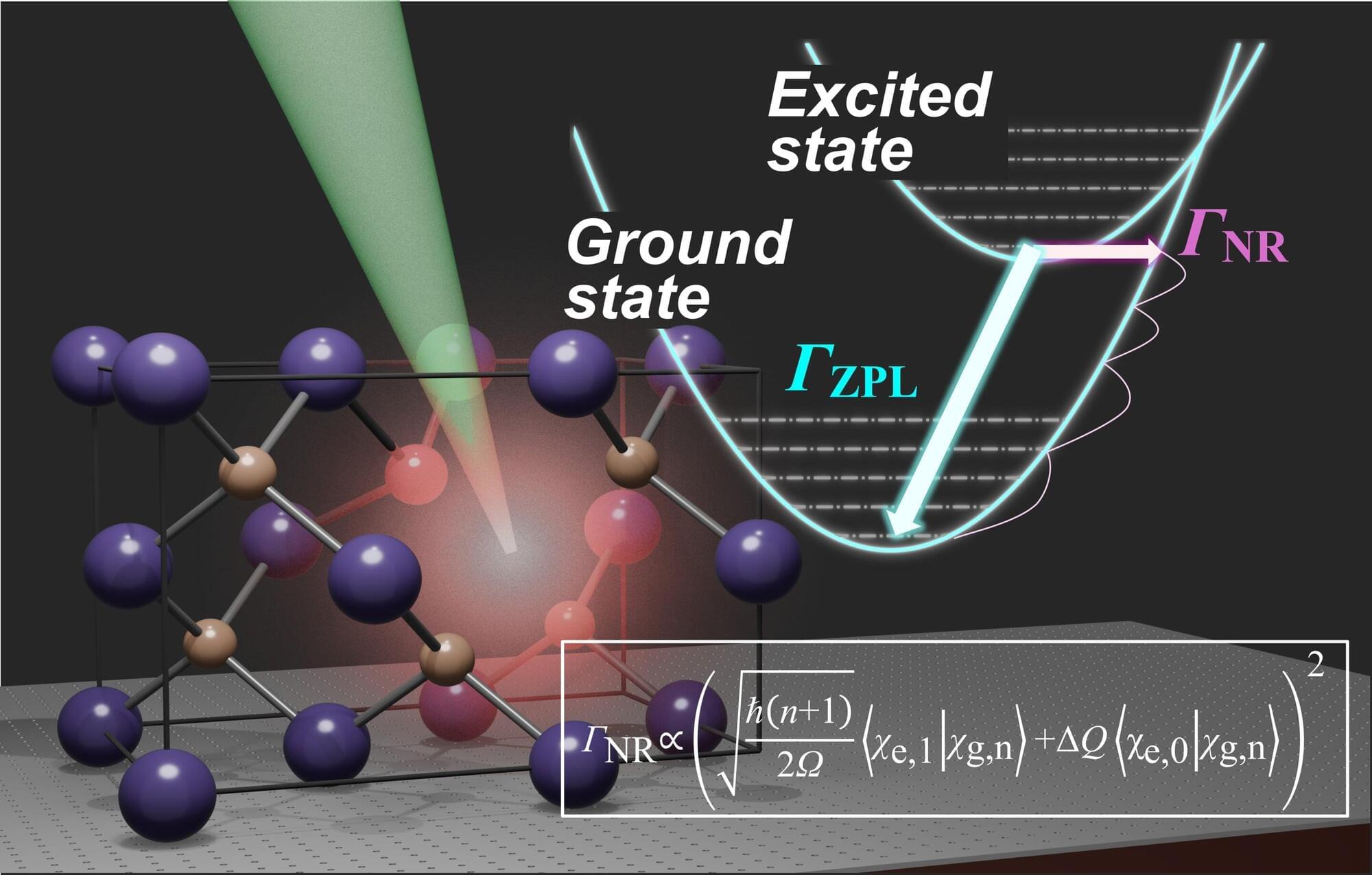
The search for materials that can power future quantum technologies is accelerating, but identifying the most promising candidates remains painfully slow. Evaluating whether a material can efficiently emit quantum light requires computationally intensive simulations, making it difficult to screen the vast number of available materials.
Now, researchers from the University of Osaka have overcome this bottleneck with a prediction method that rapidly evaluates promising quantum materials without sacrificing accuracy. They established a high-speed first-principles framework for evaluating atomic-scale color centers that emit single photons and store quantum information.
The findings are published in the journal npj Computational Materials.