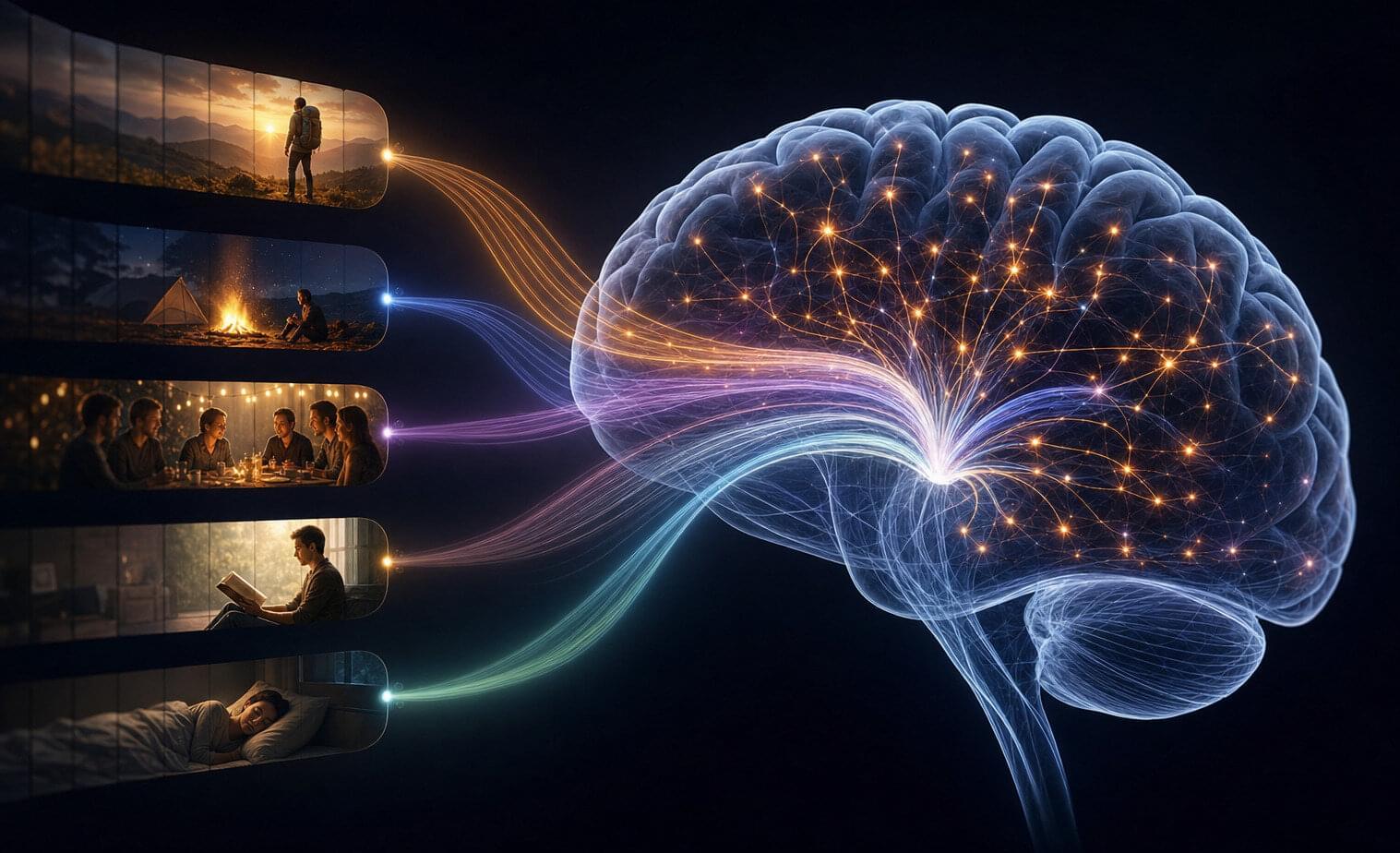
Seeing feels immediate; we open our eyes and the world seems to appear as a continuous stream. But some visual illusions show that events occurring later can change how we perceive what happened earlier, suggesting that the brain may collect and combine information for a short time before producing the experience that reaches awareness.
This effect is known as “postdiction.” Here’s an example: Two colored dots appear briefly in different places, but people see only a single moving dot that changes color along the way. This means that the second dot must influence how the first is perceived, a typical example of postdiction.
This two-stage processing theory makes so much sense of the moving dot illusion I’ve seen in psychology demos before. I always wondered why our brain would retroactively change what we think we saw first, this research finally explains that neatly.