Scientists in China predict that stacking two microscopic layers of boron could set a new record for superconductivity. Superconductors are materials that conduct electricity with zero resistance. Traditional types need temperatures close to absolute zero to work, requiring complex and expensive cooling equipment.
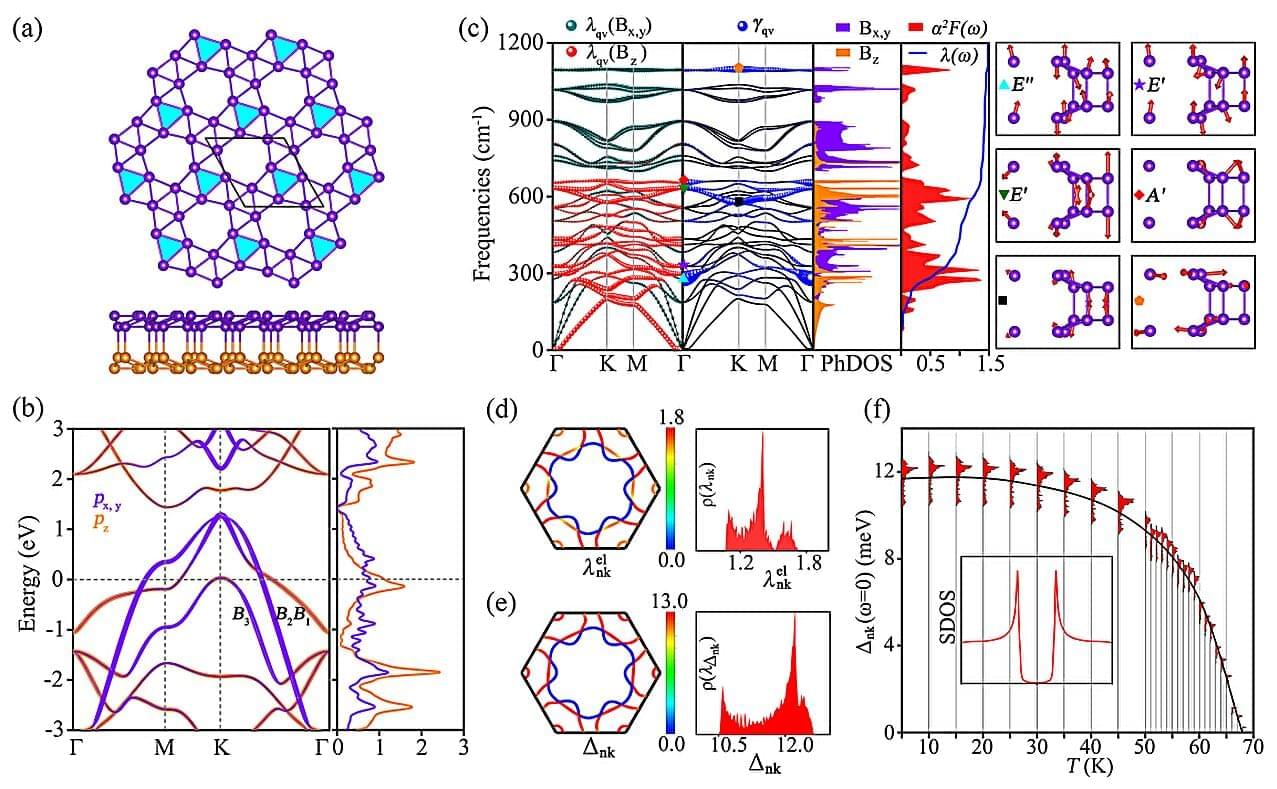
However, in this new research published in the journal Physical Review Letters, the team predicted a single-element superconductor that works at a much less extreme temperature. If replicated in the real world, it could mean much lower cooling costs and a major step toward improving the efficiency of power grids and technologies like medical MRI scanners and maglev trains.
Currently, the best-known elemental superconductor, scandium, reaches 36 Kelvin (K) (−237°C [-395°F]) only at about 260 gigapascals of pressure. In the new study, scientists predict a threshold of 68 K (−205°C [-337°F]) for the stacked boron layers.