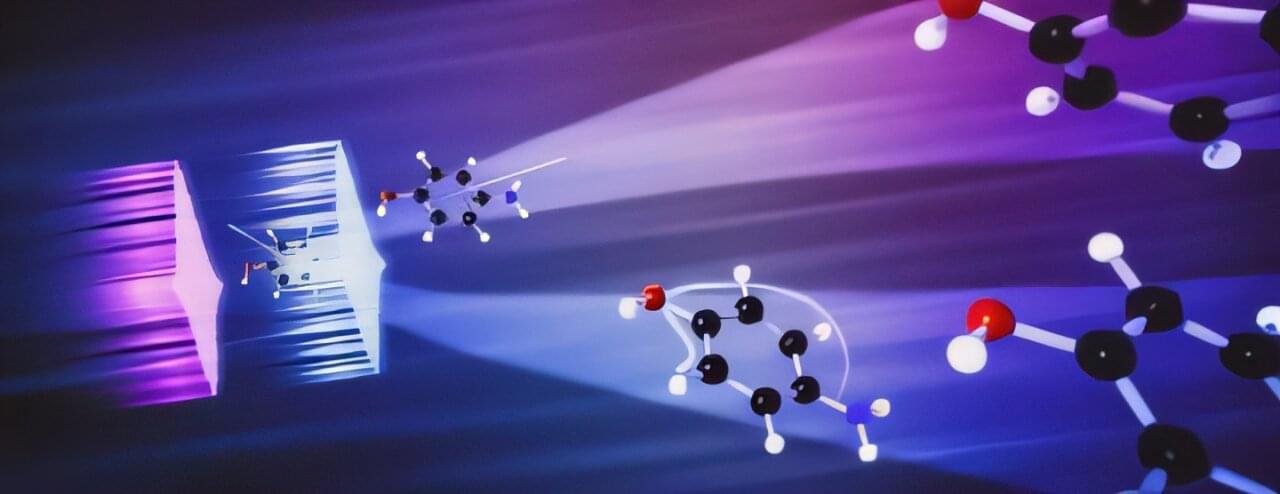
All chemistry starts with a push from electrons. In the early moments of a chemical reaction, it’s the movement of electrons that initiates the breaking of old chemical bonds and forging of new ones, transforming one molecule into another.
When an electron is removed from a molecule faster than the molecule can react—called “impulsive ionization”—the other electrons in the molecule enter excited quantum states that evolve on ultrafast timescales. Scientists have long sought to map the ultrasmall, ultrafast electronic motions behind chemical reactions on their natural timescales.
Now, researchers at the Department of Energy’s SLAC National Accelerator Laboratory have created a movie of early electron motion in an impulsively excited molecule. Each frame captures changes happening in mere attoseconds, just billionths of a billionth of a second.