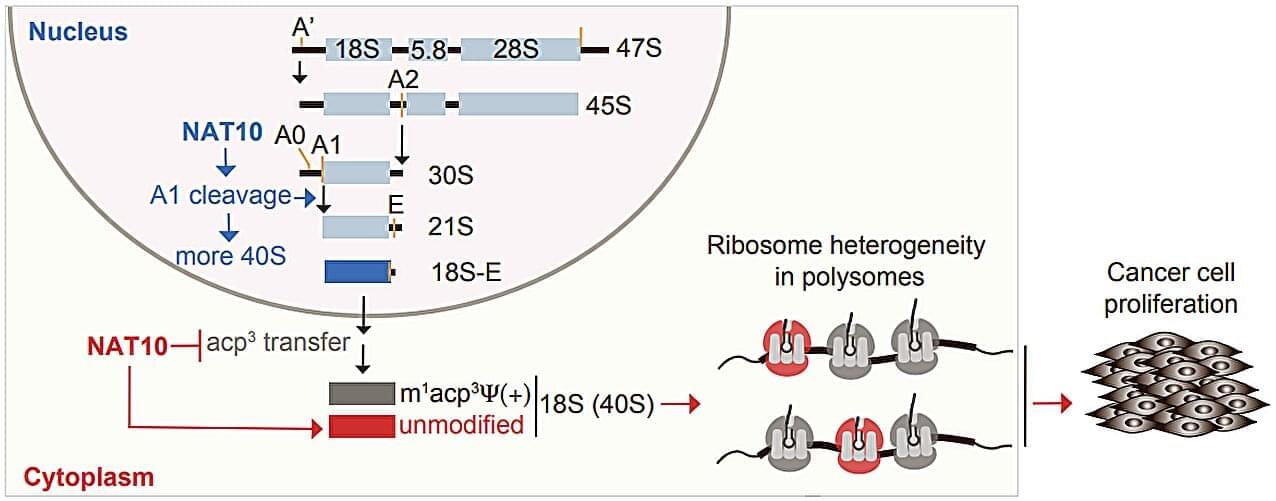
A new Northwestern Medicine study has identified a previously unknown mechanism by which an enzyme promotes cancer cell proliferation, establishing it as a promising therapeutic target for cancer, according to findings published in Nature Communications.
N-acetyltransferase 10 (NAT10) is a multifunctional enzyme with oncogenic properties and has been associated with multiple types of cancer, including hepatocellular carcinoma—an aggressive type of liver cancer—and acute myeloid leukemia, among others.
NAT10 is known to acetylate, or chemically modify, RNA, but whether this mechanism supports the oncogenic properties of this protein has remained uncertain, said Daniel Arango, Ph.D., assistant professor of pharmacology and a co-corresponding author of the study.