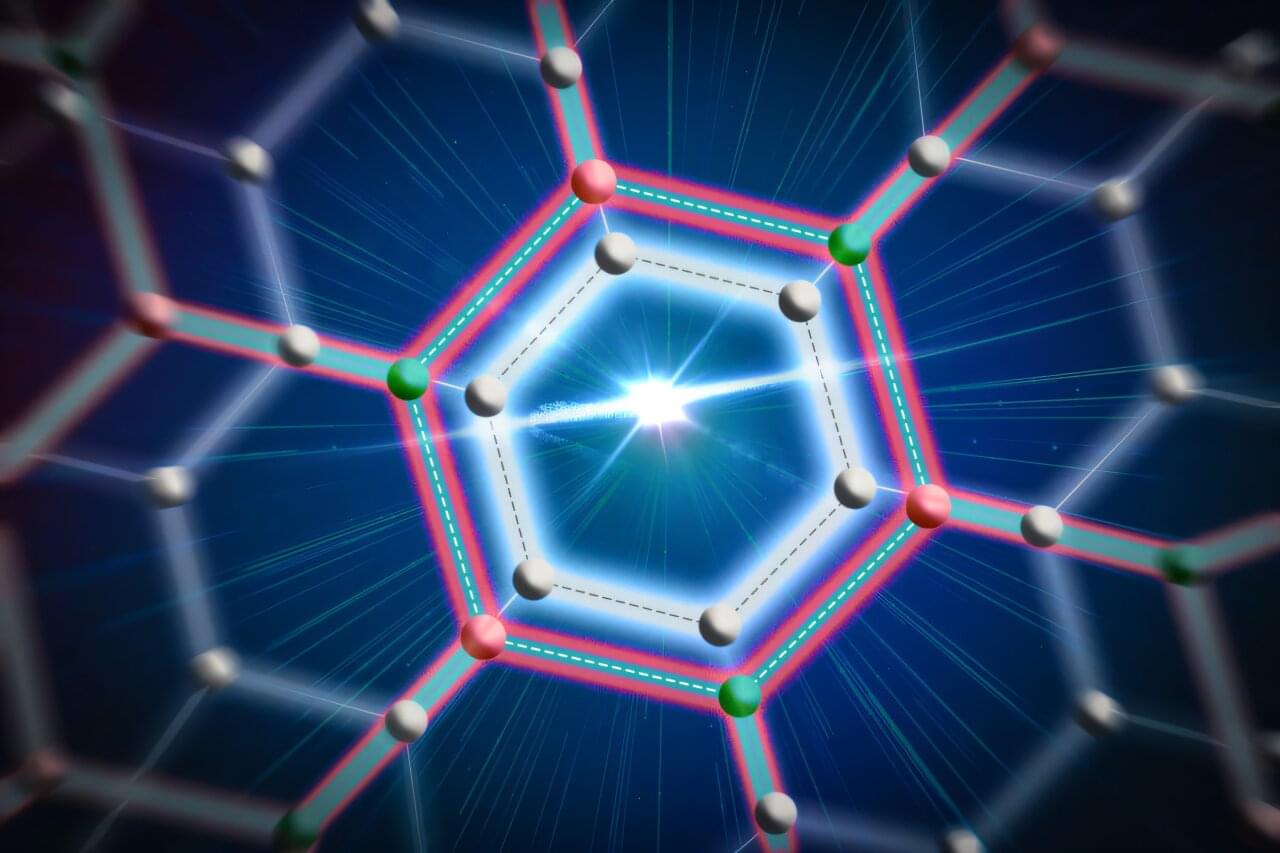
Super-thin superconducting materials, which are only one or a few atoms thick, have unique properties scientists can leverage to produce more compact, scalable, and efficient quantum devices. But these fragile materials degrade so rapidly in air that they are difficult to study or manufacture.
Now, researchers from MIT and elsewhere have discovered and harnessed a method to generate a large, uniform area of ultrathin superconducting material that remains stable in air.
They “grow” the superconducting material, called niobium diselenide, underneath another atomically thin material, carbon-based graphene. The graphene layer protects the fragile superconductor from oxidation, while guiding it to grow in a smooth layer over a large wafer-scale area.