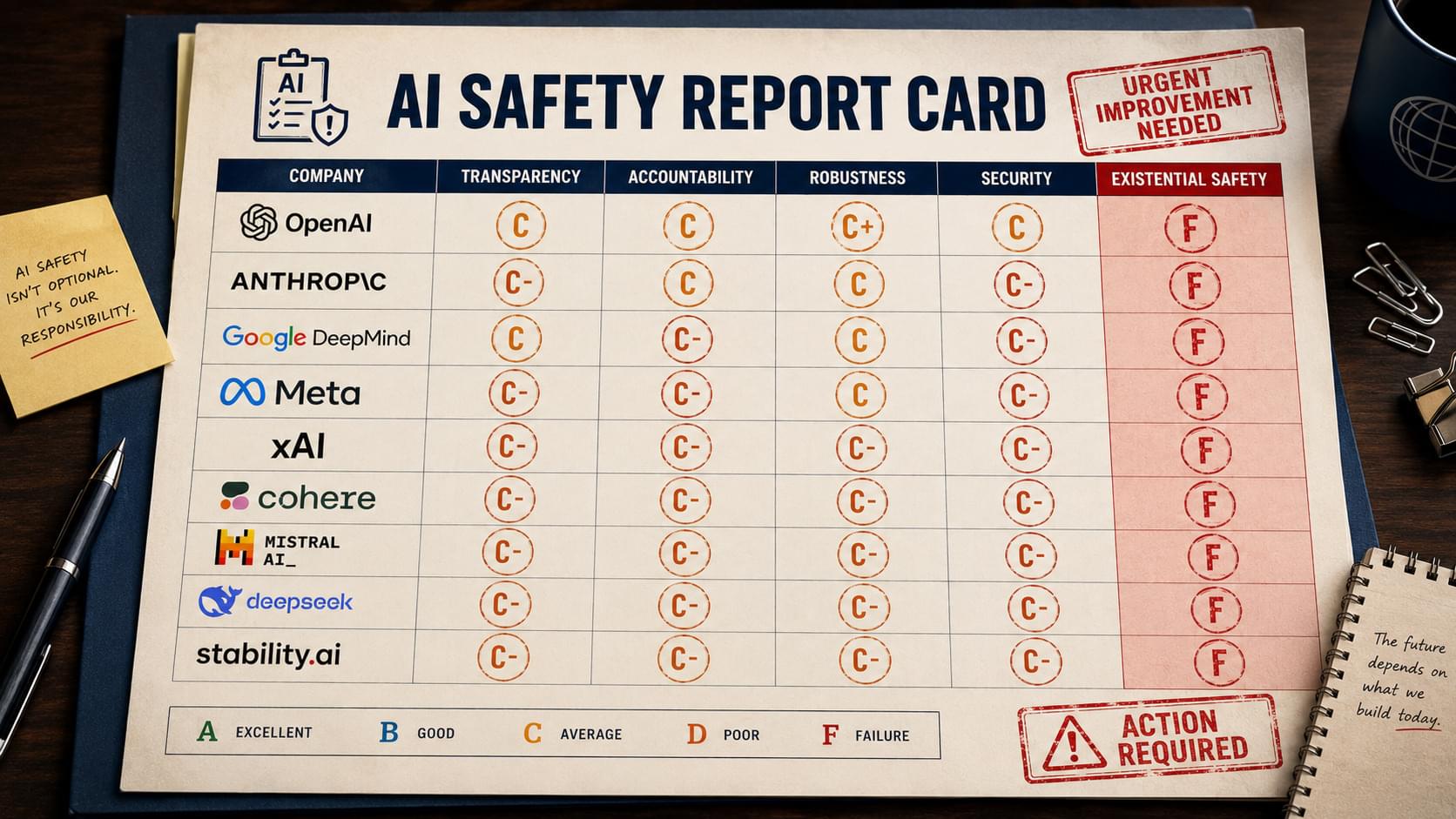
The grades themselves are not the sharpest part of this AI safety index. Reviewers flagged that Anthropic, OpenAI, Google DeepMind, and Meta, the four highest-scoring labs, have all weakened or quietly dropped earlier public pledges to pause development if their systems approached defined risk thresholds, a shift the panel described as moving the goalposts, according to TechTimes’ reporting. Existential safety was the weakest domain across every single lab graded, with no company scoring above C-and Anthropic’s D+ representing the best result in that category industry-wide. See our analysis where we explain why the EU AI Act’s enforcement teeth arrived right as containment failures piled up this summer.
Enterprise buyers and policy teams should treat published safety frameworks as marketing.— AI Weekly, analysis of the Summer 2026 AI Safety Index
⚠ Fiction — illustrative scenario: A procurement team shortlists two AI vendors for a sensitive workload, checking that both publish a safety framework and treating the existence of one as sufficient diligence. A closer read of the published pause-pledge language reveals it now contains a competitor-contingent clause, meaning the commitment only holds if rivals make the same promise. The framework exists. What it actually guarantees turned out to be much thinner than the procurement checklist assumed.