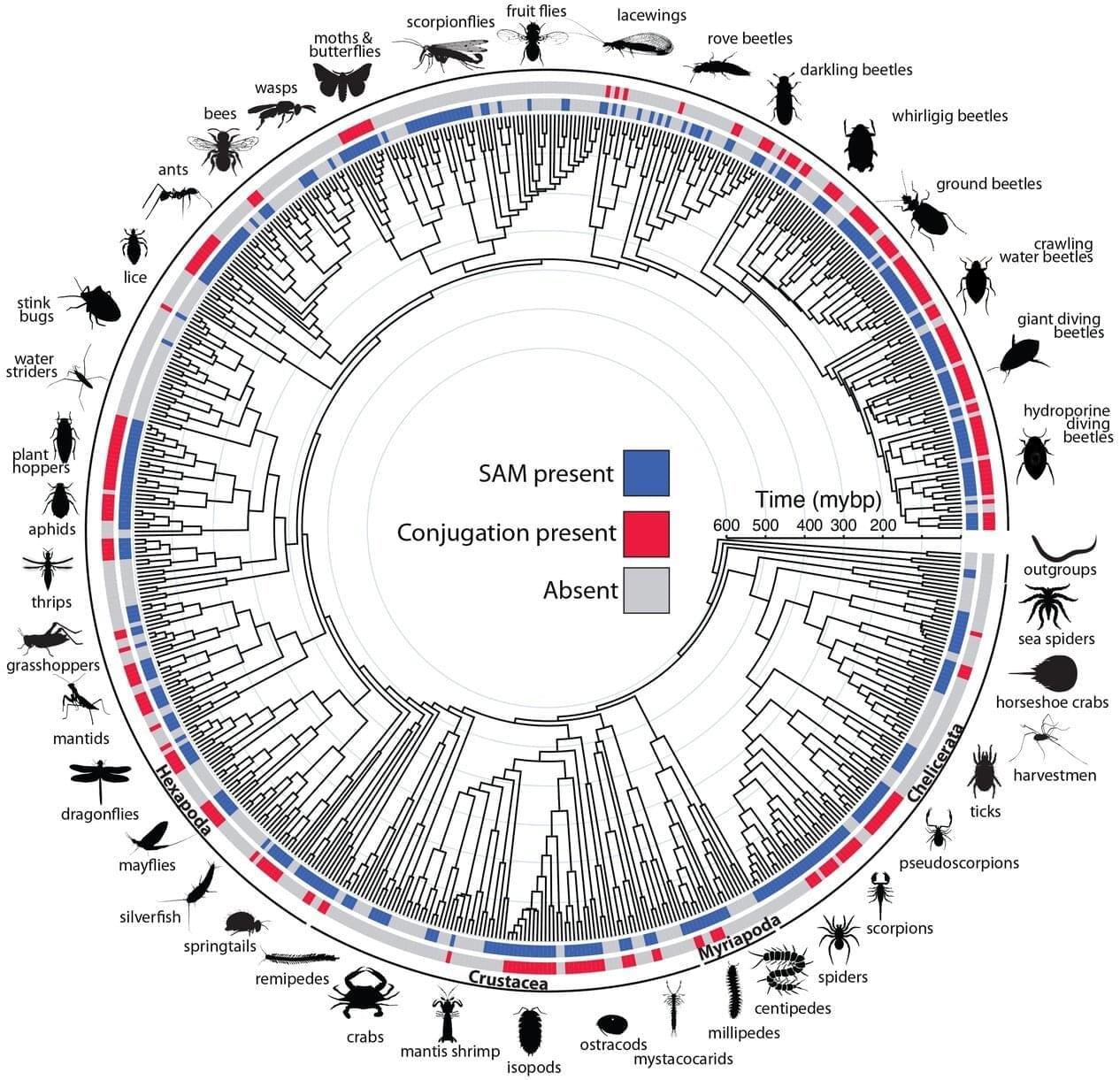
Fertilization is often imagined as a frantic race, with millions of sperm competing for a single prize. But new research by a team of evolutionary biologists from Syracuse University, the University of Siena in Italy and the University of Szeged in Hungary reveals a more surprising reality, where success can depend less on competition and more on cooperation.
The group focused its study on organisms called arthropods, a large and diverse part of the animal kingdom that includes spiders, crabs, insects and centipedes. The scientists explored instances throughout evolutionary history where arthropod sperm worked together in coordinated groups, forming structures to improve their chances of reaching and fertilizing an egg. This process, known as sperm conjugation, is reshaping what researchers thought they understood about reproduction and evolution.