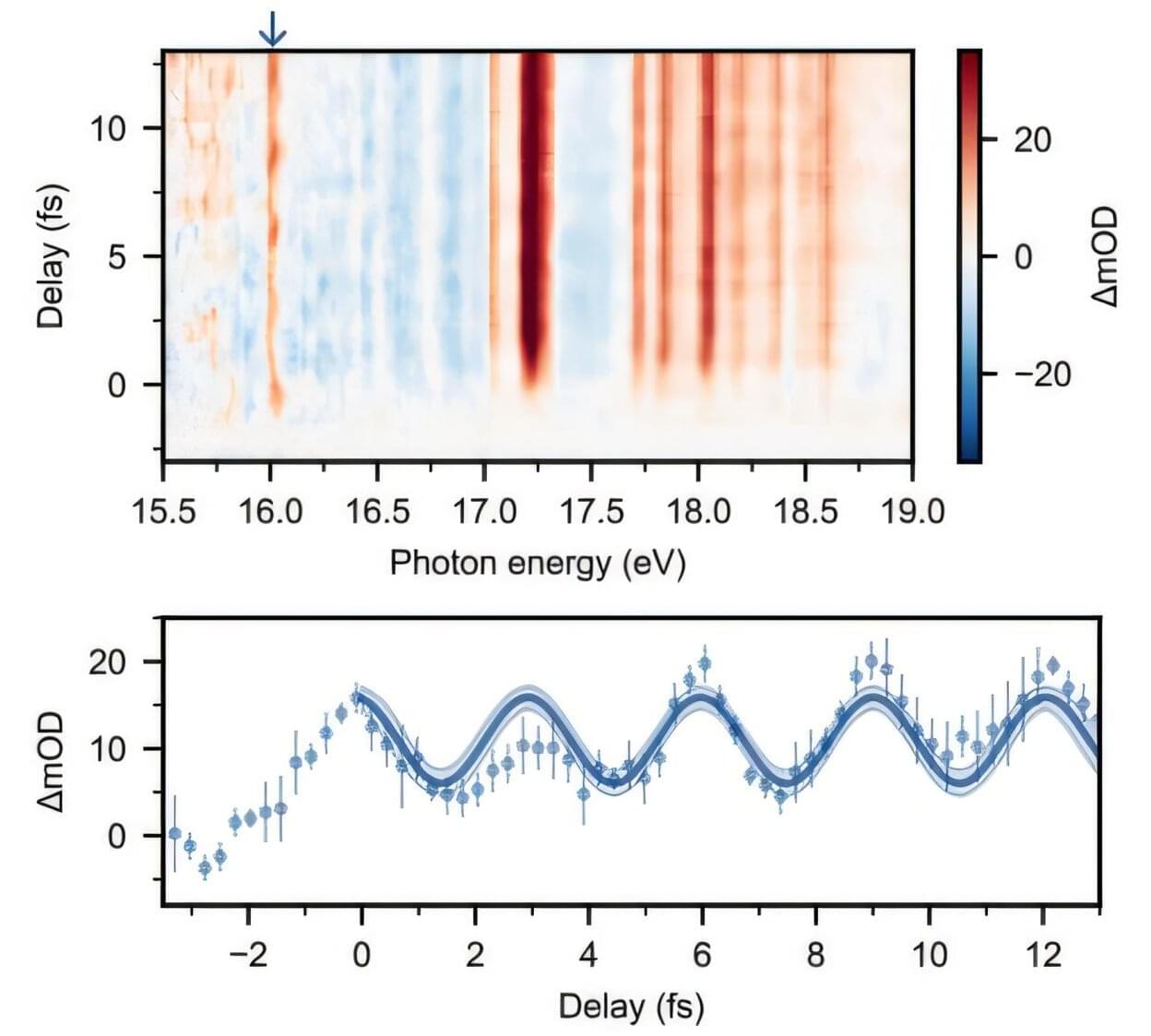
Electronic motion sets the stage for virtually every light-induced process in nature, from the first step of a chemical reaction to the flow of charge in a solid. Yet these processes unfold so rapidly that they can be observed only with flashes of light lasting a few hundred attoseconds—billionths of a billionth of a second.
Most previous attosecond experiments combined an attosecond pulse in the extreme ultraviolet (XUV) with a longer, often intense near-infrared pulse. Such fields can disturb the system under investigation and obscure its intrinsic electronic response. In the new approach, both the pump and probe are attosecond extreme-ultraviolet pulses, providing a potentially much cleaner view of the underlying dynamics.
The work is published in the journal Nature Communications.