Electrical interconnects may very well be the unsung heroes of modern microchips. These tiny wires—typically made of copper due to its high conductivity—string together the billions of transistors that drive our computers and electronic devices. But as the technology advances and additional transistors are piled on, the components must shrink to the nanoscale. And that’s when copper begins to fail.
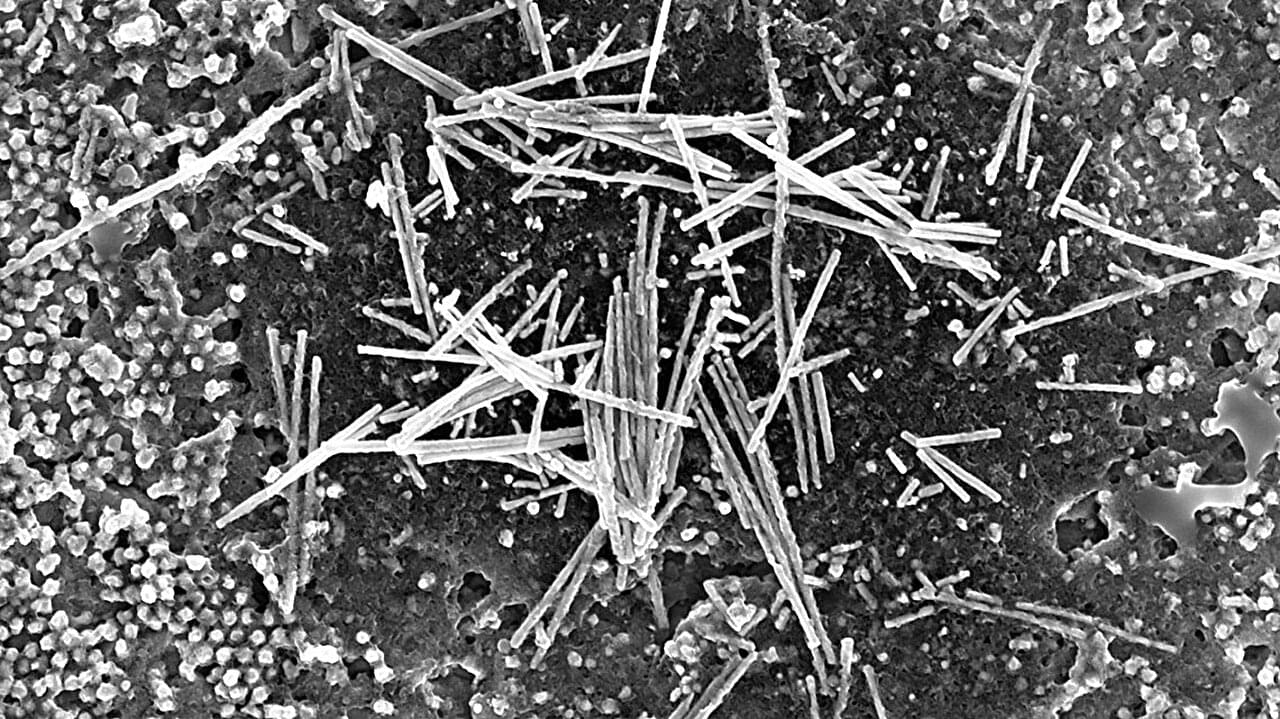
Cornell researchers have developed a potential replacement for copper interconnects: single-crystal nanowires of niobium arsenide. This topological semimetal paradoxically becomes a better conductor the thinner it gets, boosting electronic performance.
The findings were published July 16 in Science. The lead author is doctoral student Yeryun Cheon. Judy Cha, the Rick and Betty Tsai Ph.D. 1981 Professor in Materials Science and Engineering in the Cornell Duffield College of Engineering, is the paper’s senior author.