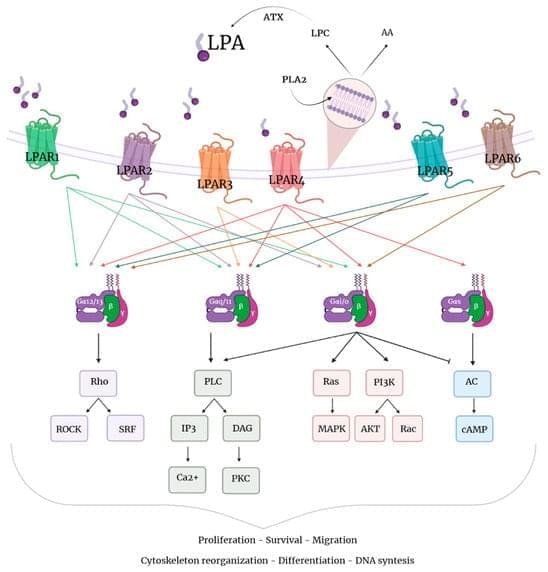
Individuals suffering from diverse neuropsychiatric and neurodegenerative disorders often have comparable symptoms, which may underline the implication of shared hereditary influences and the same biological processes. Lysophosphatidic acid (LPA) is a bioactive phospholipid and a crucial regulator of the development of adult neuronal systems; hence, it may play an important role in the onset of certain diseases such as Alzheimer’s, Parkinson’s disease, and schizophrenia. During development, LPA signaling regulates many cellular processes such as proliferation, survival, migration, differentiation, cytoskeleton reorganization, and DNA synthesis. So far, six lysophosphatidic acid receptors that respond to LPA have been discovered and categorized based on their homology.