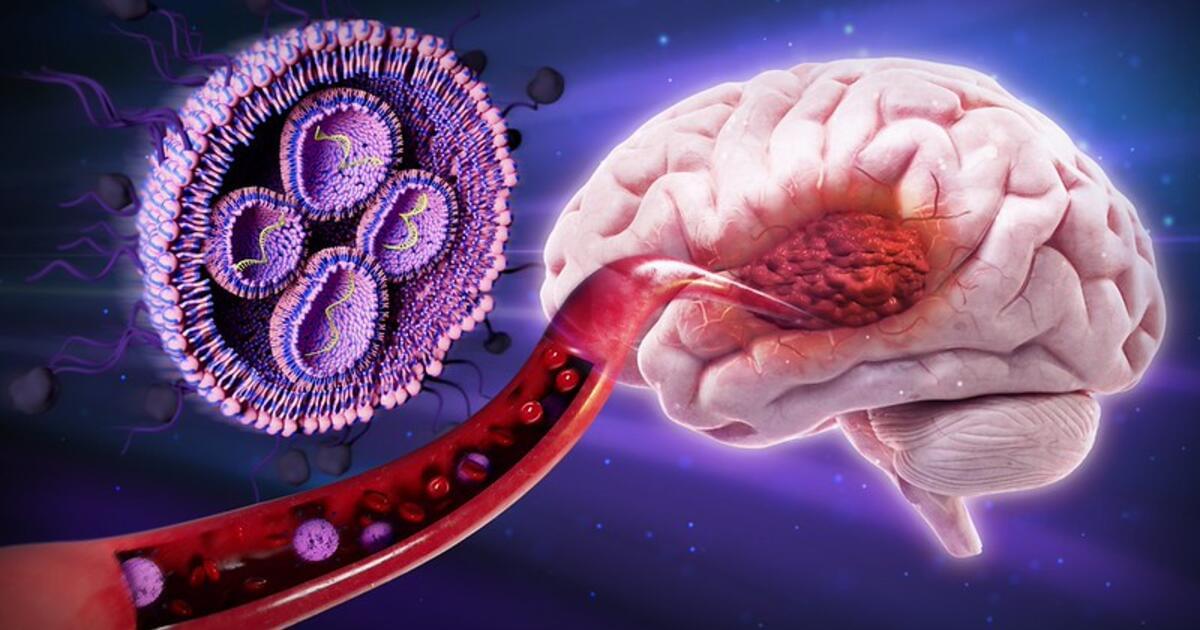
Sugar-coated nanoparticles show promise against glioblastoma.
Researchers have developed mannose-coated lipid nanoparticles capable of crossing the blood-brain barrier and delivering therapeutic PTEN mRNA directly to glioblastoma cells, one of the deadliest forms of brain cancer.
Glioblastoma cells have an exceptionally high demand for glucose. By coating the nanoparticles with a sugar molecule called mannose, the researchers took advantage of this metabolic feature, allowing the particles to enter the brain more efficiently and accumulate within tumors.
Once inside the cancer cells, the nanoparticles restored production of PTEN, a critical tumor-suppressor protein that is frequently lost or dysfunctional in glioblastoma. In mouse models, this approach significantly slowed tumor growth, increased median survival by approximately 50%, and showed no measurable toxicity in major organs.
Although these findings are still preclinical and have not yet been tested in humans, they represent an exciting advance in overcoming one of neuro-oncology’s greatest challenges: safely delivering targeted therapies across the blood-brain barrier.
PORTLAND, Ore. – Researchers at Oregon State University have potentially found a new way to treat the most aggressive form of brain cancer, glioblastoma, whose two-year survival rate is less than 30%.
The study led by Oleh Taratula, Olena Taratula and Yoon Tae Goo of the OSU College of Pharmacy addresses what they describe as the two most persistent obstacles to effective glioblastoma treatment: Delivering therapeutic agents through the blood-brain barrier, the cell network that acts as a security checkpoint between the bloodstream and the central nervous system, and then getting those agents to preferentially target tumors.
In research published in the Journal of Controlled Release, the scientists demonstrated the novel treatment technique in a mouse model. They loaded lipid nanoparticles with genetic material that promotes tumor suppression, then coated the nanoparticles with a type of sugar. The result was a 50% median increase in glioblastoma survival time.