Every year bacteria kill more than a million people worldwide through infections that no longer respond to antibiotics. In many cases, why those bacteria are so hard to stop comes down to their uniquely powerful structure.
On the surfaces of many disease-causing bacteria, fibers thousands of times thinner than a human hair bristle, acting like biological grappling hooks. These fibers help bacteria latch onto body tissue, build biofilms, which are sticky bacterial communities that antibiotics struggle to penetrate, and reel in fragments of DNA from their environment, including genes that help them resist drugs.
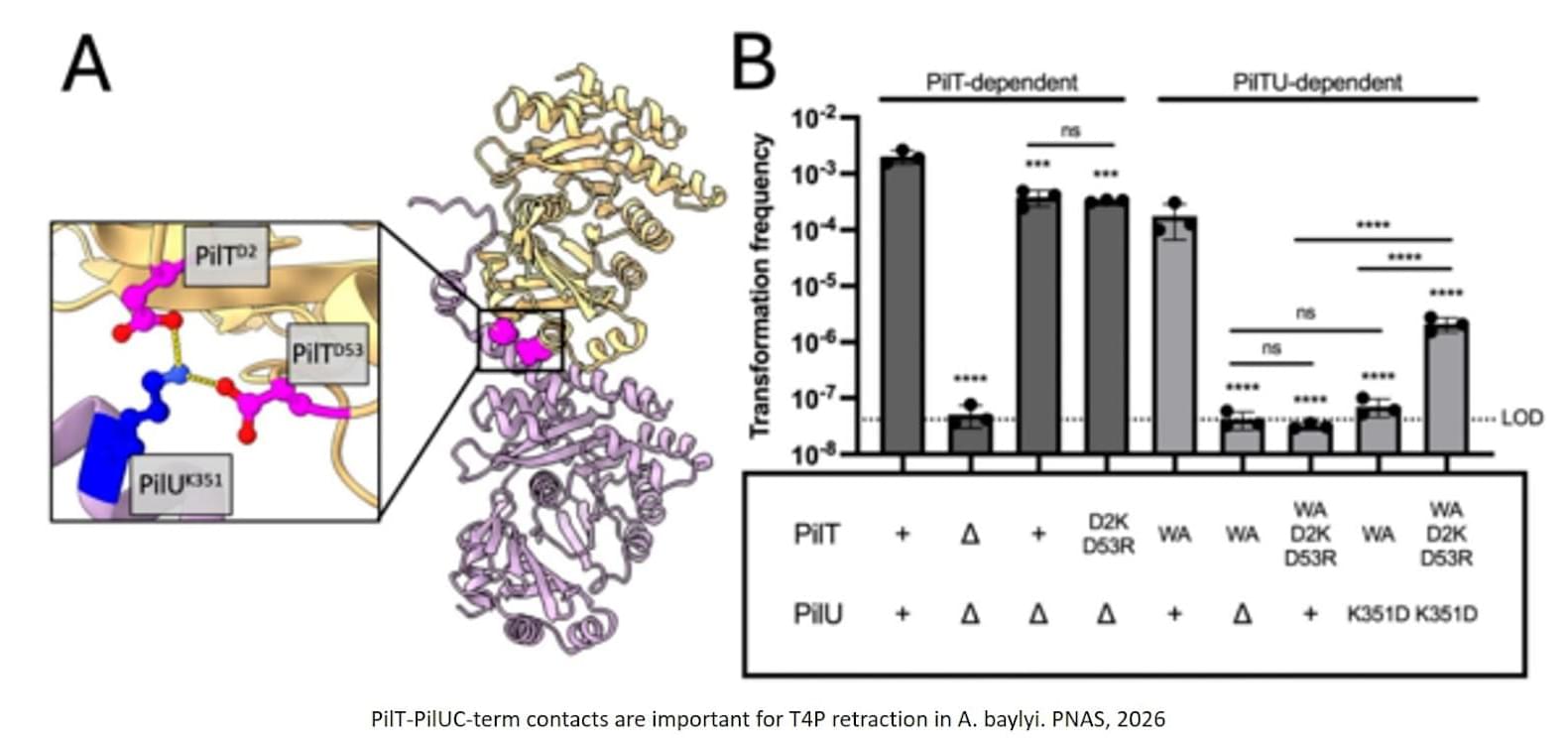
Now, scientists have solved a key mystery about how those hooks work. A new study, published in the Proceedings of the National Academy of Sciences, reveals the molecular mechanism behind one of the most powerful mechanical actions in all of biology, the reeling in of tiny surface fibers called type IV pili.