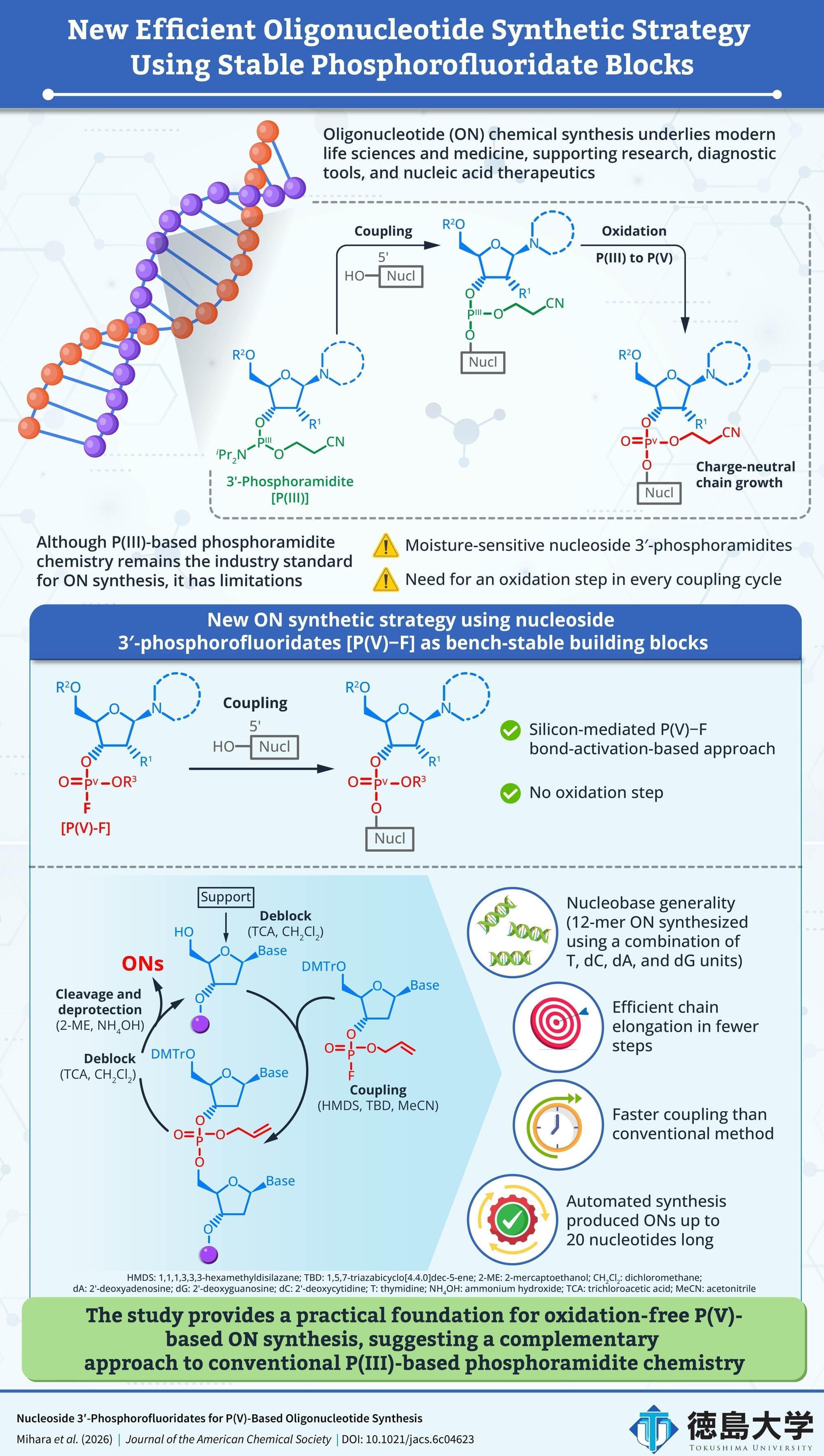
The chemical synthesis of oligonucleotides (ONs) is central to modern molecular biology, diagnostics and nucleic acid therapeutics. While demand for high-quality ONs is increasing, the conventional synthetic method has long-standing efficiency challenges. Widely adopted P(III)-phosphoramidite-based ON synthesis requires an oxidation step after every nucleotide coupling cycle and uses moisture-sensitive building blocks, adding complexity to the workflow and slowing the process.
Early studies of ON synthesis showed that pentavalent phosphorus [P(V)] chemistry could form linkages between nucleotides. However, practical limitations, including unstable intermediates, slow coupling, harsh deprotection or poor performance during chain elongation, prevented these methods from replacing P(III)-based phosphoramidite chemistry.
A recent study led by Associate Professor Noriko Saito-Tarashima of the Graduate School of Pharmaceutical Sciences at Tokushima University in Japan, along with Nana Mihara, a doctoral student from the same institution, investigated whether nucleoside 3′-phosphorofluoridates [P(V)–F] could be used as stable building blocks for ON synthesis without requiring a separate oxidation step.