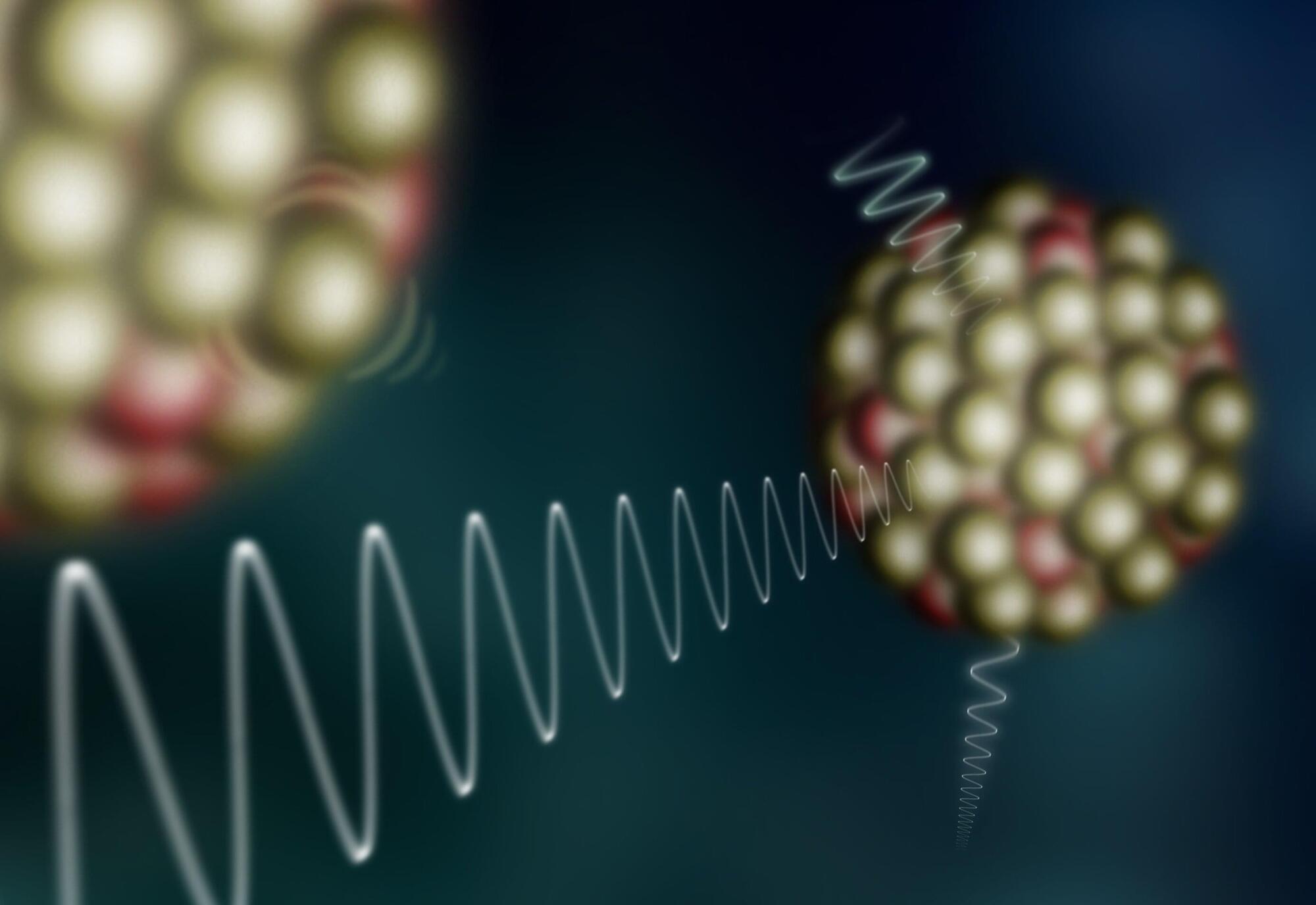
In a single experiment, physicists have measured the “excess” emission of high-energy gamma rays from more than a dozen heavy, unstable atomic nuclei. Mapping the gamma-ray emissions of so many isotopes produced in nuclear fission marks an important step toward a better understanding of one of the key phenomena in modern nuclear physics: the fission process itself.
Why do excited heavy nuclei produced in fission appear to emit excessive amounts of particularly energetic gamma radiation? New clues to this long-standing question have emerged from an international experiment conducted at the GANIL accelerator facility in Caen, northern France. Here, a beryllium-9 target was bombarded with uranium-238 ions, producing unstable curium-247 nuclei that rapidly underwent fission into two lighter fragments.
By combining unique experimental techniques, researchers were able—for the first time within a single experiment—to collect data on high-energy gamma-ray emissions from more than a dozen heavy, unstable isotopes. The first results of the experiment, to which the Institute of Nuclear Physics of the Polish Academy of Sciences (IFJ PAN) in Krakow made a significant contribution, have just been published in Physics Letters B.