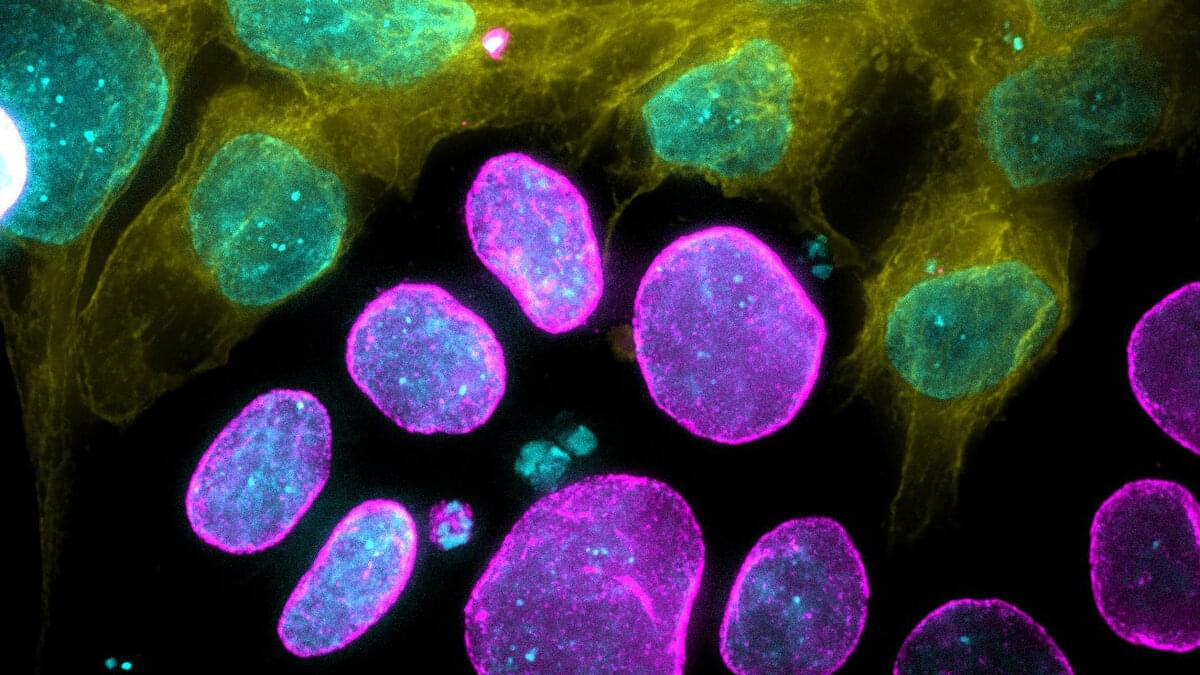
“We were looking at this in a two-dimensional culture, but in actual human tissue where cells are packed together very tightly, you might anticipate that this would occur even more frequently,” said Gary Gorbsky, OMRF professor and study co-author. “This opens up the possibility of a new process of genetic transfer of information.”
What effect did rogue DNA have on the new cell?
To test whether this new DNA that came from another cell had a functional impact on the new cell, the scientists engineered donor cells with resistance to a specific antibiotic. After combining donor and recipient cells in culture and inducing chromosome damage, they found that recipient cells acquired the same antibiotic resistance – direct evidence that mammalian cells can trade genetic material through simple cell-to-cell contact.