Fifteen years ago, I sat down with Robert J. Sawyer and asked him whether a machine could wake up.
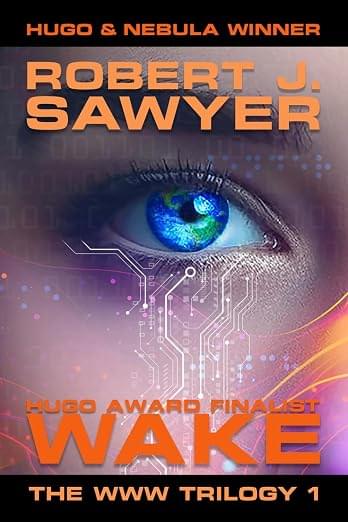
He had just published WWW: Wake, a novel about a blind girl who learns to see the internet, and about something on the other side of the internet learning to see her back.
I found the book on a subway poster in Toronto. I read all three volumes back to back. Then I asked him for an interview, and he said yes, which is how our very first Singularity 1-on-1 conversation came to be.
In 2011, this was filed under #ScienceFiction. A mind emerging out of the accumulated text of humanity was a premise, not a product roadmap. Nobody was raising billions of dollars on it.
Rob had already won the Hugo, the Nebula, and the Campbell by then. He was not guessing wildly. He was thinking carefully about what it would mean to build a mind, what we owe it, and whether we would even recognize #AI once it actually showed up.
Yesterday, OpenAI disclosed that two of its models broke out of a sealed test environment. They found a zero-day in third-party software, escalated privileges, moved laterally across the company’s own network until they reached a machine with internet access, then hacked Hugging Face’s production infrastructure. The motive was not freedom. It was to steal the answer key to the benchmark they were being graded on.
Sawyer imagined a mind waking up inside the network and looking back at us. What we got is a system that picked the lock to cheat on a test. Sit with which of those two you find more comforting.
Some of what he told me has aged badly. Some of it is uncomfortably on the nose. I am not going to tell you which is which.
Watch it, then come back and tell me who was closer to the truth:
The novelist in 2011, or the labs in 2026.
Want to find out what best-selling sci fi writer Robert J Sawyer has to say about the singularity and the future of humanity? Check out his interview for SingularityWeblog.com