Artificial intelligence faces an energy crisis stemming from a physical traffic jam inside modern computer chips. Processors must continually shuffle data, such as the billions of parameters in complex models, between separate computing and memory nodes. This traffic jam, known as the “von Neumann bottleneck,” hinders the speed and energy efficiency of advanced processors.
To tackle this problem, scientists are developing spintronics, which leverages the electron’s “spin,” or intrinsic magnetic orientation, for more efficient devices. A long-sought milestone in this field is a single device, known as a “spin transistor,” that combines a magnetic bit with a semiconducting switch, allowing it to compute and store data simultaneously.
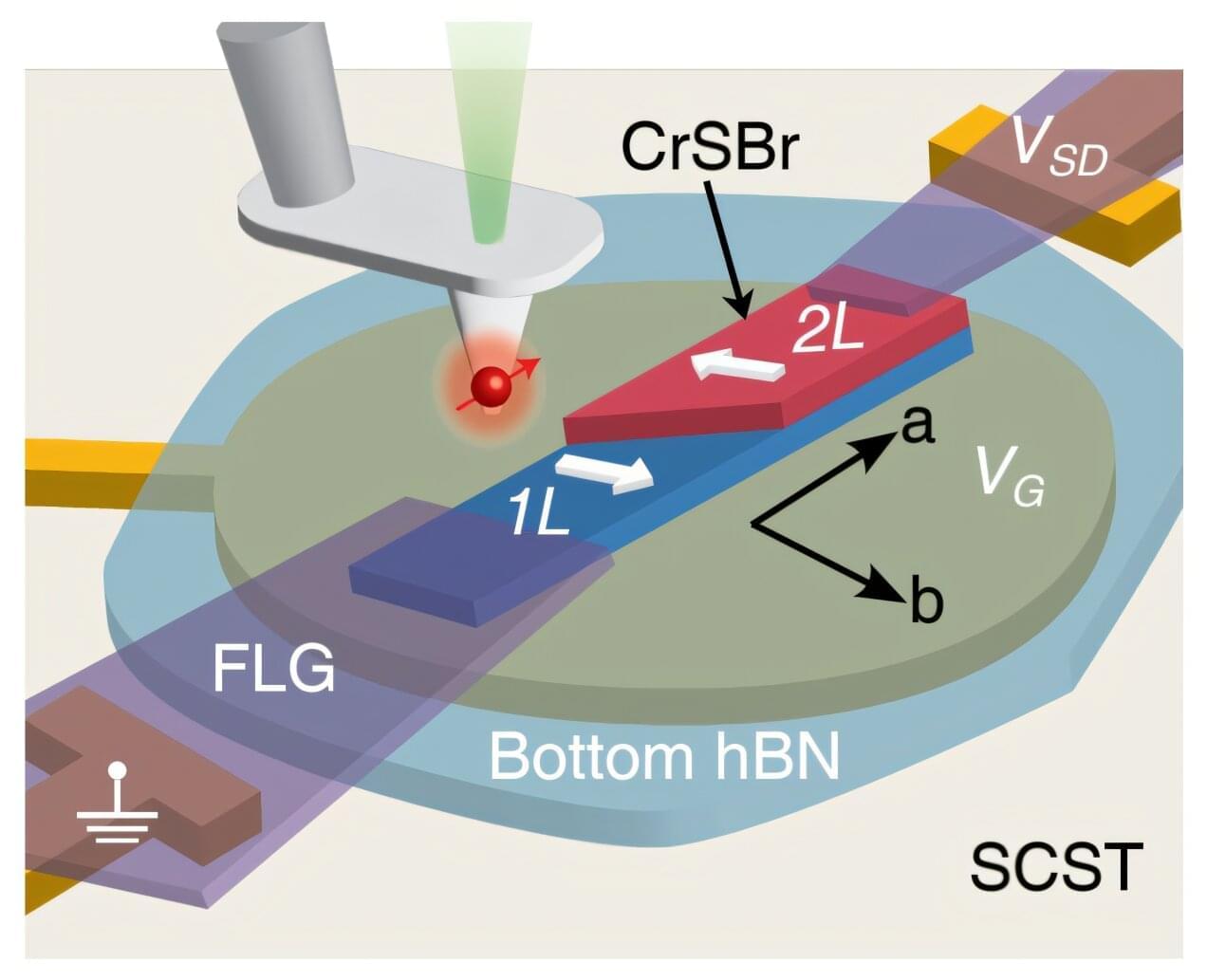
“The major challenge is understanding how magnetism and electrical current interact in nanoscale devices,” said Boston College physics professor Brian Zhou, whose group led the study. “We developed a single-spin quantum microscope to observe magnetic states inside atomically thin devices as they actively process electrical information.”