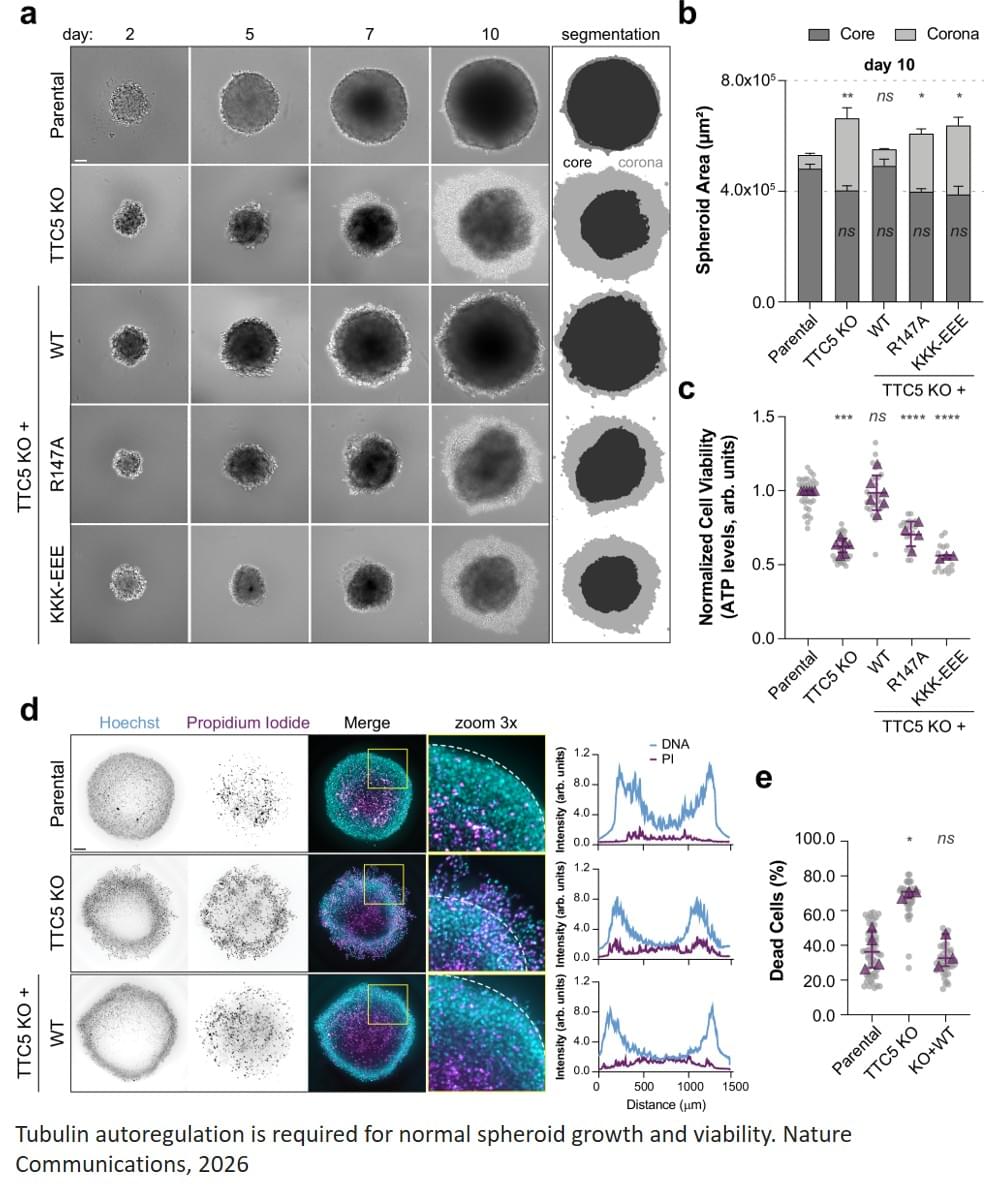
For cells to function properly, they must produce the right amount of each protein. It is a delicate balance: both too little and too much can compromise essential cellular functions. A research team has now shown that even a modest excess of tubulin – the protein that assembles into microtubules, the cell’s internal scaffolding – is enough to disrupt tissue architecture and reduce cell viability. Published in Nature Communications, the study demonstrates that the quantity of a protein is just as important as its function.
Microtubules, built from tubulin, form the cell’s internal skeleton. They help cells maintain their shape, transport molecules, divide, and remain firmly attached to neighbouring cells. Rather than being rigid structures, microtubules are constantly assembled and disassembled to adapt to the cell’s changing needs. This dynamic behavior depends directly on the amount of tubulin available.
For more than forty years, biologists have known that cells possess a mechanism that slows tubulin production when its levels become too high. However, the biological purpose of this regulatory pathway remained unknown. To address this question, the team used three-dimensional spheroids. “These 3D cell culture models behave like tissues and reproduce cell-cell interactions much more faithfully than conventional two-dimensional cultures,” the author explains.