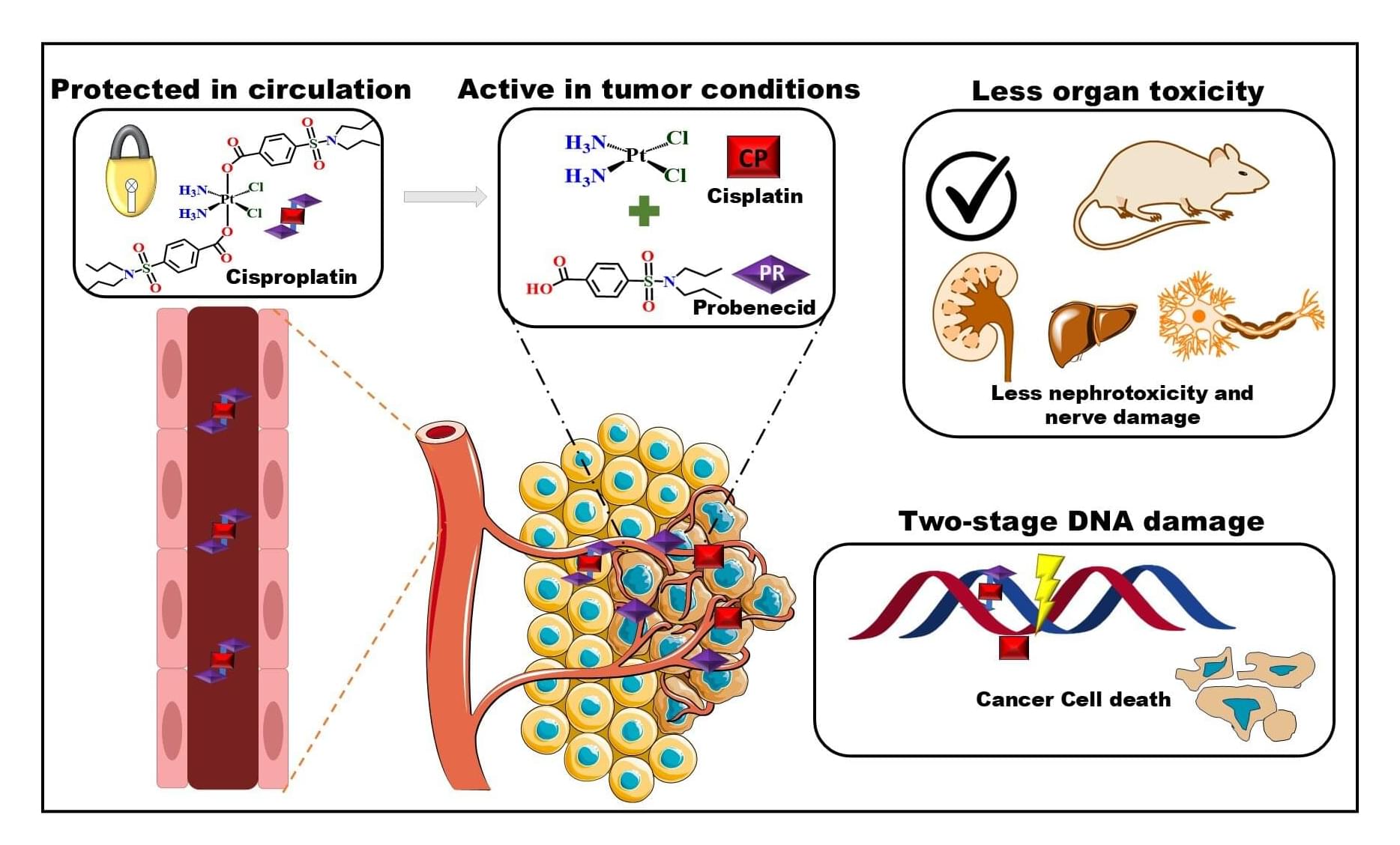
Cisplatin is one of the most successful cancer medicines ever developed. Doctors use it to treat many cancers, including lung, ovarian, breast, testicular and head and neck cancers. However, cisplatin has a serious problem. It does not attack only cancer cells. It can also reach healthy organs and damage them. In particular, cisplatin can harm the kidneys and peripheral nerves. Patients receiving cisplatin often experience pain, tingling, numbness or weakness in their hands and feet. These side effects can become so severe that doctors must reduce the dose or stop treatment completely.
This led our research team to ask a simple question: Can we keep cisplatin’s cancer-fighting power while reducing its harmful side effects?
To explore this idea, we developed a new molecule called cisproplatin, or CPP. We can think of it as a smarter, “pro version” of cisplatin designed to remain stable while traveling through the body and become active under tumor-like conditions. The research is published in the Journal of Medicinal Chemistry.