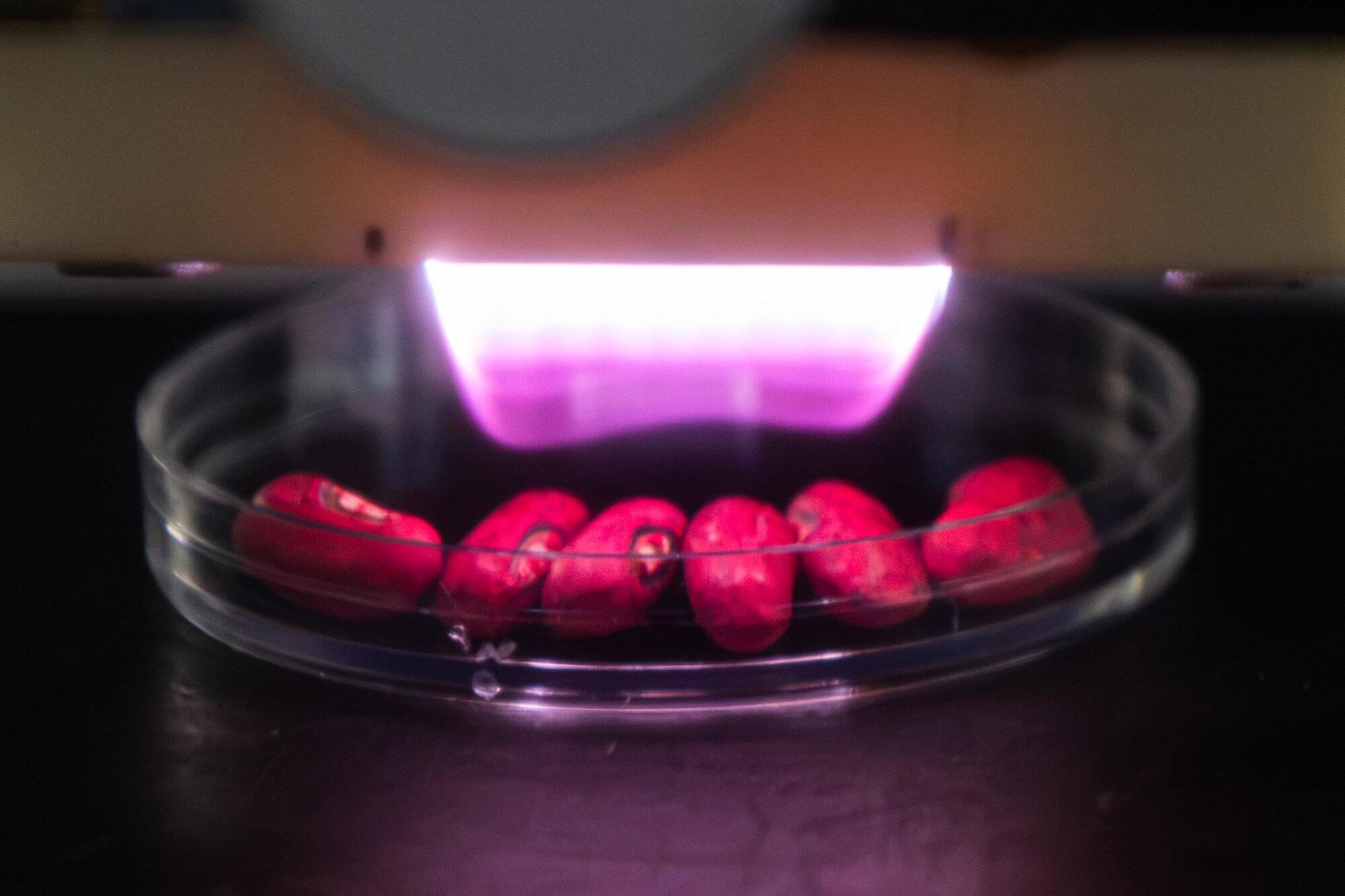
Occasionally, the sun unleashes powerful flares and coronal mass ejections, which hurl plasma and energetic particles into space. On the infant Earth, this solar activity drove cascades of atmospheric chemical reactions that may have helped form the building blocks of life. More recently, scientists have discovered that applying plasma to seeds in a controlled way can trigger similar activity, making them faster-growing and more resilient. Researchers at Nagoya University and Kyushu University in Japan have compiled a comprehensive review of this new field—termed “plasma agriculture”—as a potential sustainable solution to address global food shortages.
The word plasma brings to mind a hot, ionized inferno that makes up the fourth state of matter. But the plasma used here is different. By applying high voltage to air or any gas, electrons are stripped from a tiny fraction of its molecules and gain very high energies. These electrons zipping around can effectively mimic the behavior of plasma even though the bulk of the gas remains at room temperature.
This low-temperature plasma can be applied directly to seeds without burning them. Excessive use of chemicals and genetic modification of plants cause concern for many people. Instead, plasma agriculture can offer similarly high crop yields without invasive intervention.