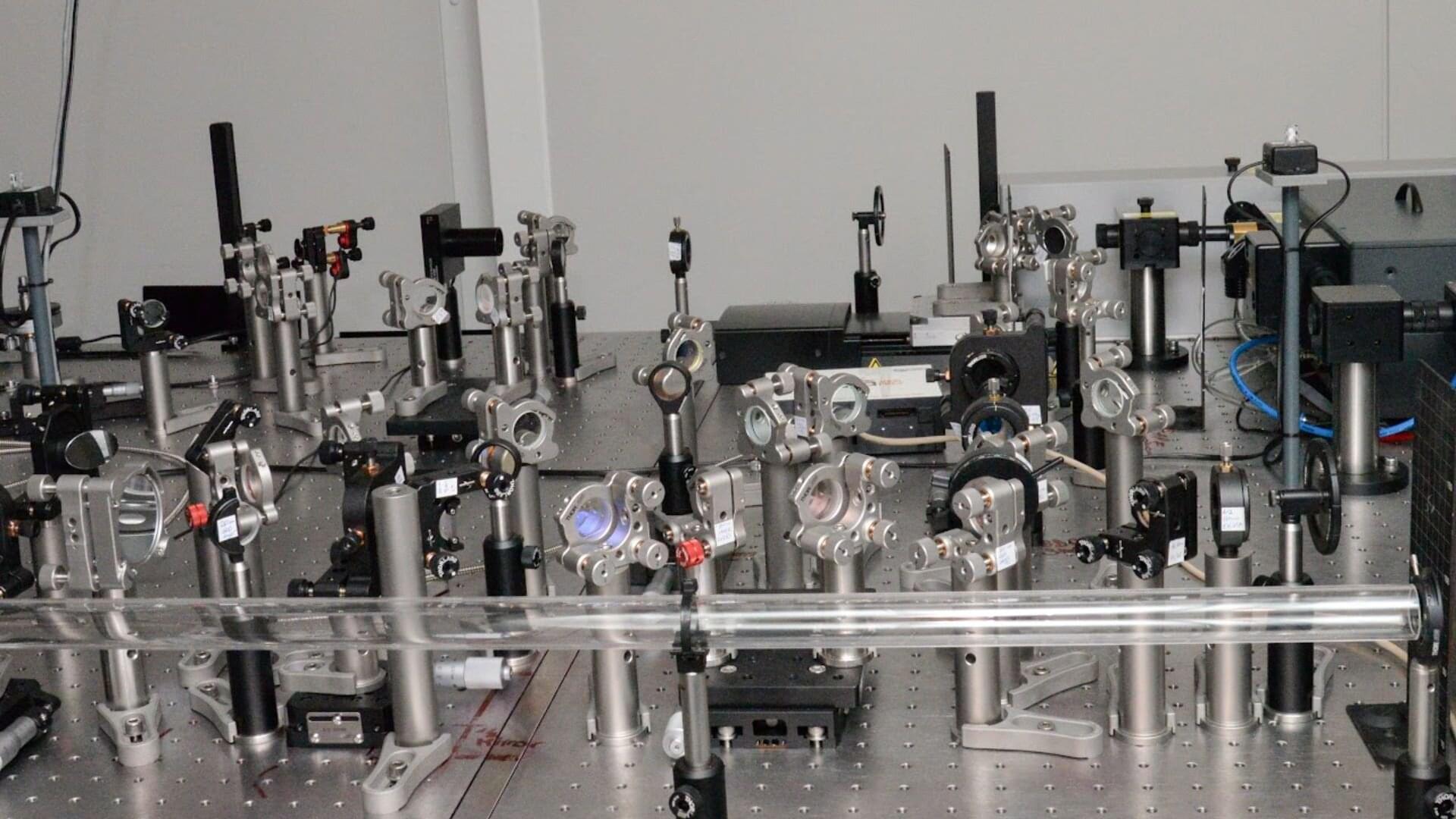
A new study published in Nature Physics reports the first direct experimental evidence of a Floquet topological state, a novel light-induced phase of matter that, until now, has existed only on paper and in simulations. Topological insulators can conduct electricity along their surface while remaining insulating throughout their bulk. Physicists have spent years developing Floquet engineering, a technique that uses intense, rapidly oscillating light fields to temporarily reshape a material’s electronic structure.
Combining the two ideas seemed like a natural next step: use light to coax an otherwise ordinary material into behaving like a topological insulator on demand. A scheme for realizing such a “Floquet topological insulator” in a semiconductor was proposed in 2011, but pinning down the effect experimentally proved elusive. The predicted state would be short-lived, easy to mistake for other light-matter effects and difficult to disentangle from a material’s ordinary electronic behavior.
Now, researchers have closed that gap using tin telluride (SnTe), a semiconductor that sits close to a topological phase transition. Using femtosecond laser pulses, the team captured direct evidence of the transition.