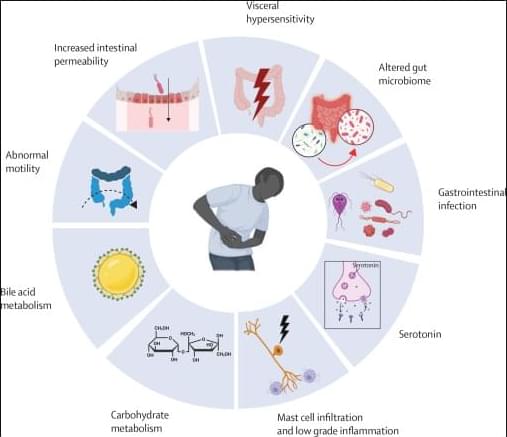
Despite the continued absence of a definitive biomarker for irritable bowel syndrome (IBS), research over the last three decades has identified a wide range of underlying pathophysiological abnormalities. Peripheral mechanisms include gastrointestinal infection, changes in the gut microbiome, visceral hypersensitivity, increased intestinal permeability, low-grade mucosal inflammation and altered immune function, abnormal gastrointestinal motility, and the role of serotonin, bile acid metabolism, and carbohydrate metabolism.