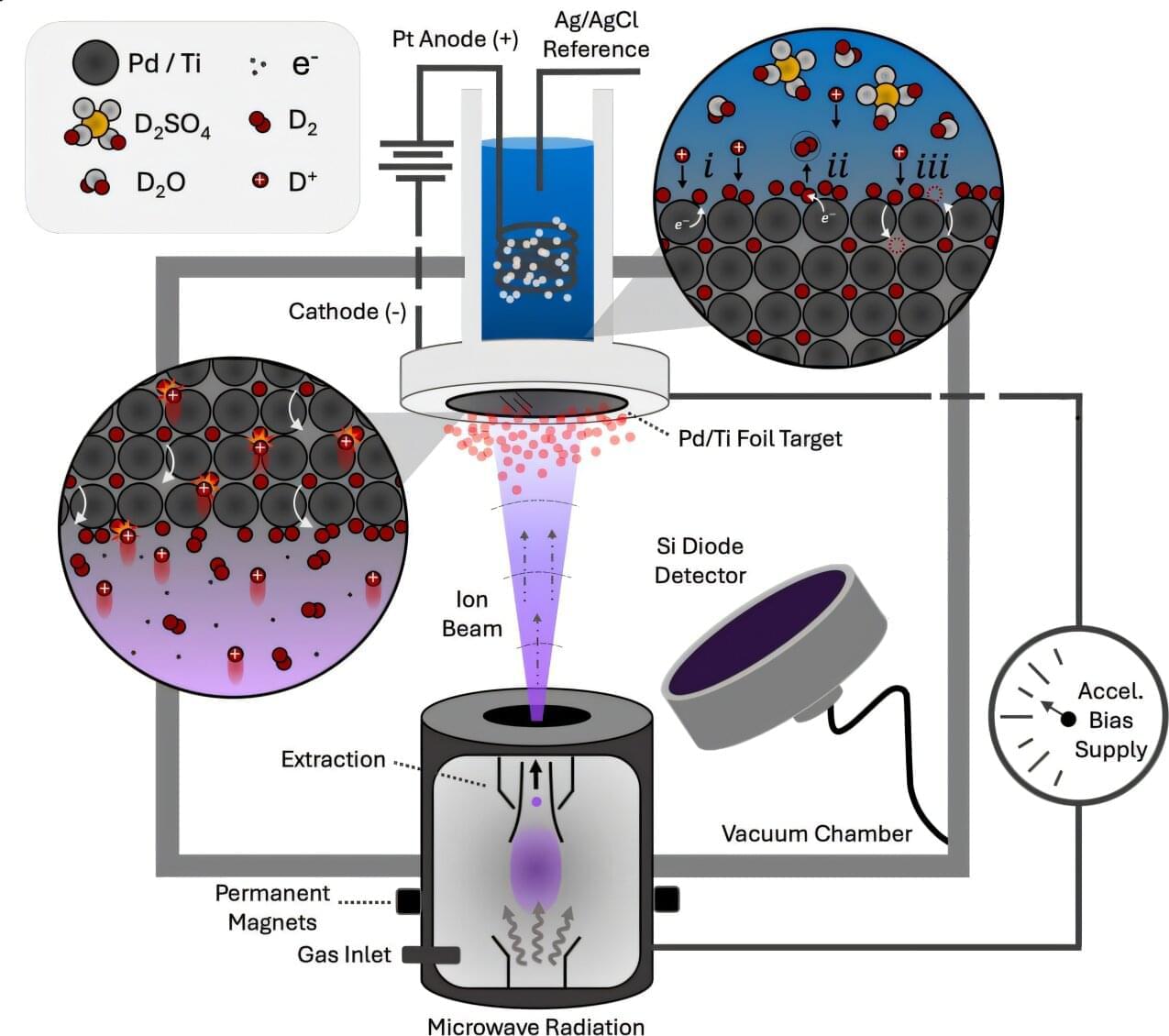
Fusion at high temperatures powers the sun and, if harnessed, could provide a potential source of energy here on Earth. But controlling fusion reactions has other benefits. The process also generates subatomic particles called neutrons that are used in a range of applications spanning medicine, research and national security.
Scientists at the University of California, Davis, and the Department of Energy’s Lawrence Berkeley National Laboratory (Berkeley Lab) have found that the materials surrounding a fusion reaction can dramatically increase how often it occurs, particularly at low energies where fusion is rare. Their study is published in Nature Communications. The study’s first author is Micah Karahadian, a doctoral candidate in Munday’s lab at UC Davis.
Their approach establishes a way to study and engineer nuclear reactions within solid materials, opening a new field of “materials-driven fusion.” Instead of designing materials just to survive the harsh conditions of fusion, researchers might be able to design materials that boost the reaction under specific conditions, similar to the way catalysts speed up chemical processes.