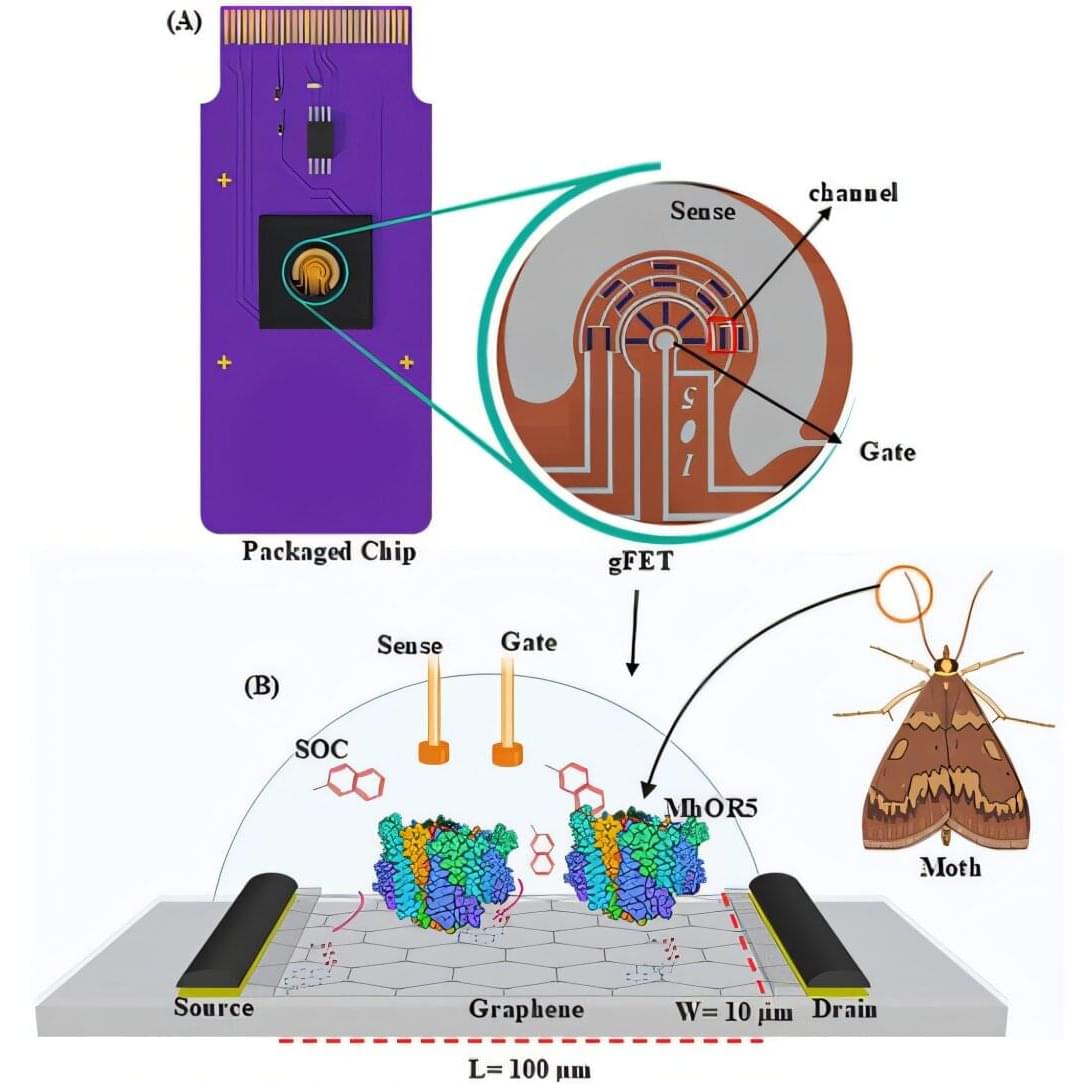
Bioengineers at the University of California San Diego integrated the olfactory receptor of an insect called a jumping bristletail into semiconductor chips made of graphene, creating an electronic nose capable of sniffing out a wide variety of small organic compounds. This biomimetic bioelectronic sensor can detect and distinguish between molecules that are difficult for conventional electronic sensors to differentiate. This work opens the door to building semiconductor-based chemical sensing systems inspired by nature for applications in health care, environmental monitoring, food quality, agriculture and biodefense.
In a paper published in Advanced Materials, researchers led by bioengineers at UC San Diego describe a method for manufacturing the MhOR5 odorant receptor from the insect Machilis hrabei at scale and chemically attaching the purified MhOR5 protein to high-performance graphene field effect transistors (gFETs). gFETs are semiconductor devices that rely on graphene instead of silicon as the conductive material, resulting in exceptional sensitivity to molecular changes.
The researchers tested their MhOR5-functionalized gFETs against 16 chemically diverse compounds, including DEET, hexanol and eugenol, at different concentrations. The sensor produced a concentration-dependent electrical response for each of the 16 compounds.