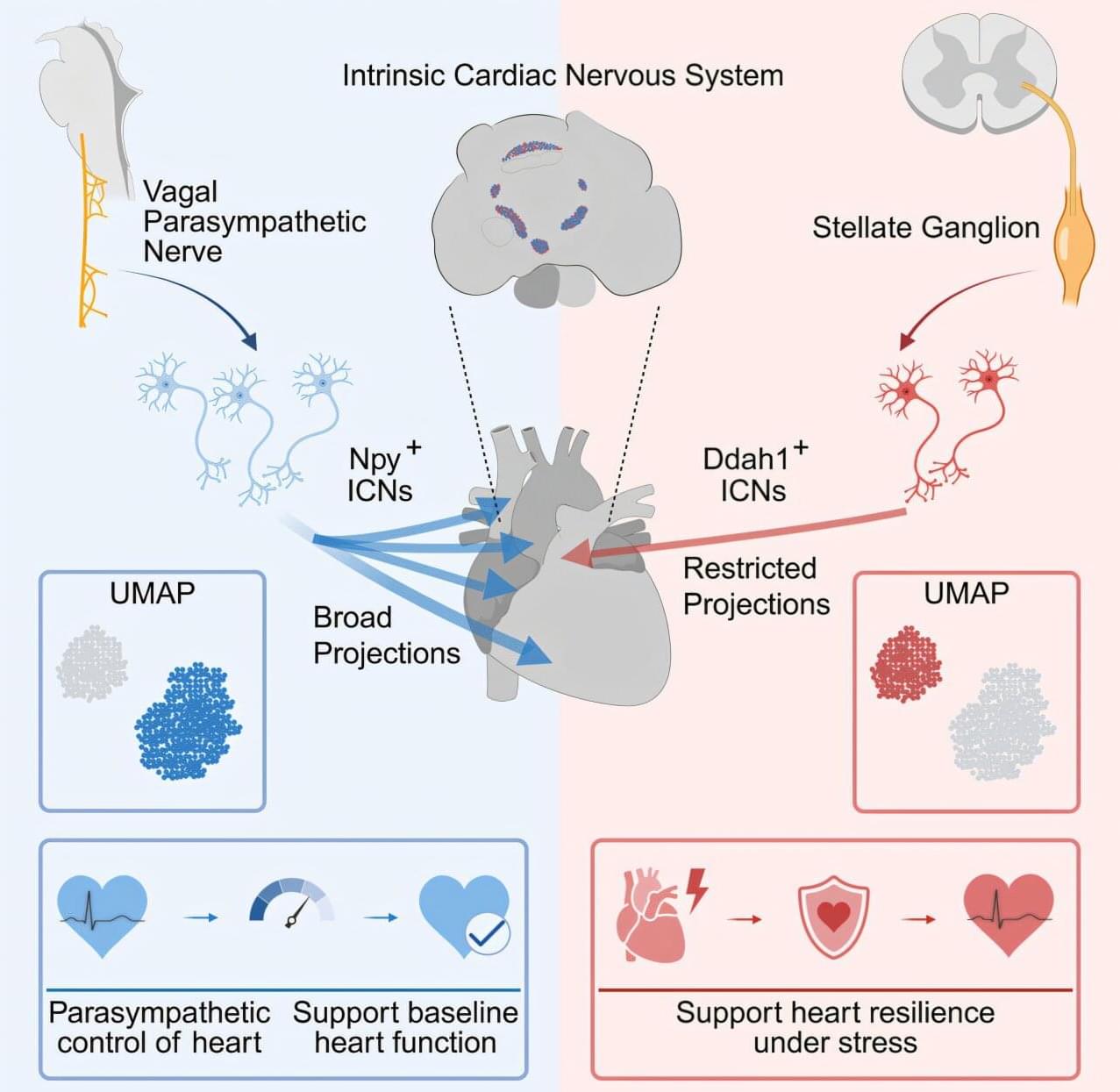
For years, scientists have known that the heart has its own network of nerves, the intrinsic cardiac nervous system (ICNS), sometimes called its “little brain.” Exactly how it functions has remained something of a mystery, but a new paper published in the journal Cell sheds light on how these heart nerves work to keep the heart beating steadily.
The heart’s nerve cells fine-tune signals coming from the brain to control heart function, including heart rate. But because they are so few, doctors have struggled to determine exactly what they do. To solve this, researchers from Yale University School of Medicine genetically engineered adult mice so their heart nerves would glow, making them much easier to study.
After locating the nerves, the team analyzed which genes were active in them. They discovered that the nerves fell into two categories, which they called Npy neurons and Ddah1 neurons.