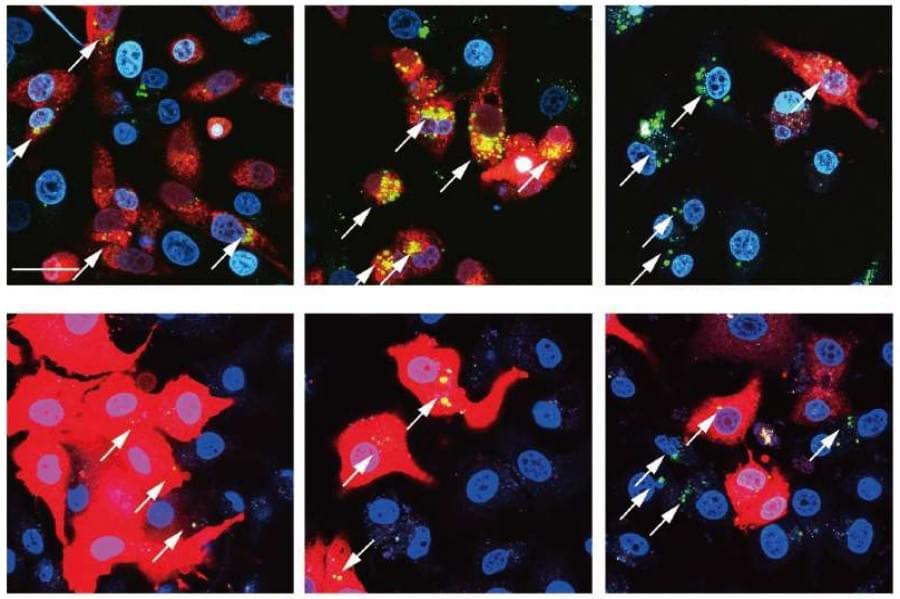
Researchers including those from the University of Tokyo found a way to optimize how cells bind to small packages they release called extracellular vesicles. By coating the vesicles with metal ions, they made cells and their corresponding vesicles stick together more strongly than they would naturally. This reduced the time needed for cells to capture their own vesicles, even in mixtures containing billions of other vesicles. The team demonstrated an application of this by improving two kinds of blood tests for cancer cells, and it could have downstream applications in drug delivery, rejuvenation and more.
Anyone afflicted with cancer will often face a long and difficult journey. The early stages of any medical intervention will necessarily include a biopsy, tissue sample collection, such as a liquid biopsy which uses a blood sample. These aren’t perfect, but medical researchers are trying to improve them, with one such method being how to amplify the signals indicating cancer cells. This should be possible as all cells release tiny telltale particles known as extracellular vesicles. Professor Keisuke Goda from the Department of Chemistry at the University of Tokyo and his team members found a way to engineer extracellular vesicles in a way never seen before which could improve liquid biopsies and aid in some other medical and research applications in drug delivery, rejuvenation and more.
“Each extracellular vesicle is only about a thousandth the width of a human hair and carries a tiny sample of material from the cell that made it like a little molecular ‘message in a bottle.’ Cancer cells release these packages too but finding them in blood is like searching for a few specific grains of sand on a beach,” said Assistant Professor Tianben Ding from the Department of Chemistry. “So, we developed a simple way to make both the packages and the cancer cells much easier to find. By coating the packages with tiny amounts of lanthanide metals, we made matching packages and cells stick together over 25 times more strongly. This provides a versatile platform that can improve how engineered extracellular vesicles interact with their target cells, enabling applications ranging from cancer detection to targeted drug delivery and rejuvenation.”